


Research conducted in Dongsha Atoll National Park has revealed a stable population of lemon sharks inhabiting the area. Current surveys estimate that there are approximately 300–400 juvenile sharks, most measuring between 60–100 cm in length. These individuals are believed to be within three years of age and likely born in Dongsha waters. The establishment of the national park has effectively protected this important shark nursery ground and contributes significantly to shark conservation efforts. Along the shores of Dongsha Island, it is common to observe S-shaped ripples across the water surface, sometimes accompanied by two small dorsal fins breaking the surface. On calm, windless days, the clear waters allow glimpses of juvenile sharks swimming beneath the surface as they move with the tides into seagrass beds to forage. Although they can be seen from the shore, their high alertness makes underwater encounters difficult, as they quickly swim away when approached. Recent investigations have confirmed that these juveniles are the sicklefin lemon shark.
 |
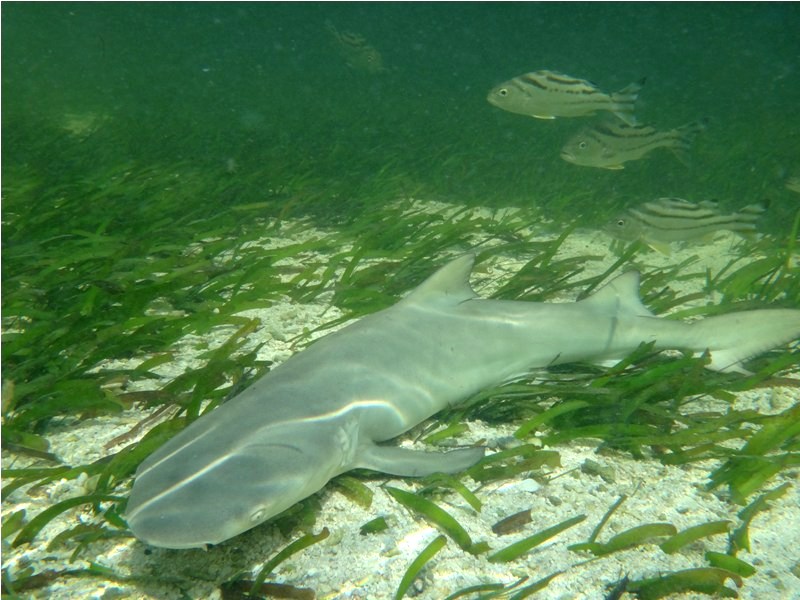 |
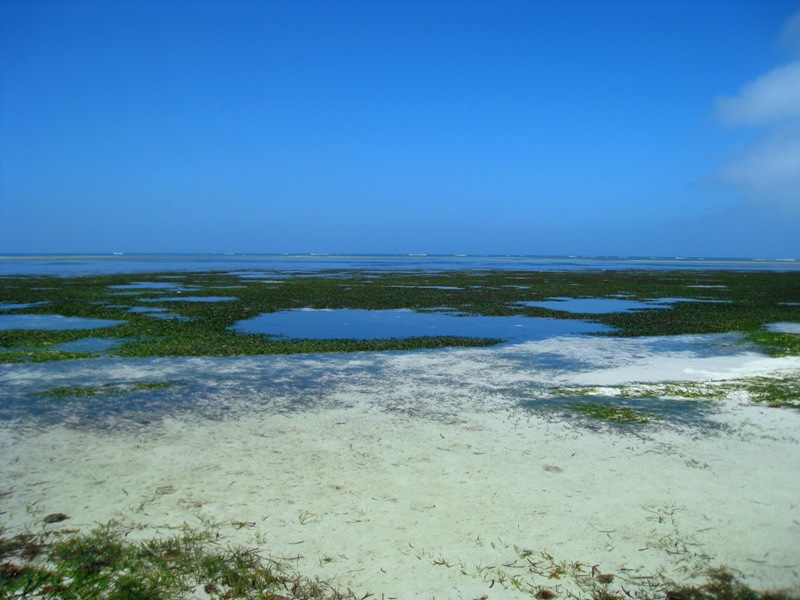
| Lush seagrass beds surrounding Dongsha Island serve as important nursery habitats for marine life. (Photo credit: Chen Hui-ju) | Juvenile sicklefin lemon sharks are commonly observed foraging within seagrass beds. (Photo credit: Chen Yu-yun) |
Lemon sharks belong to the family Carcharhinidae and the genus Negaprion, reaching lengths of over 3 meters as adults. Two recognized species exist: the sicklefin lemon shark (also known as the Indo-Pacific lemon shark) and the shortfin lemon shark (also known as the American lemon shark). Schultz et al. (2008) analyzed their phylogeographic relationships and suggested that the sicklefin lemon shark originated in Australia and expanded northward to southern Taiwan. The divergence between the two species likely occurred in French Polynesia, eventually leading to the speciation of the shortfin lemon shark. The shortfin lemon shark is primarily distributed in the waters of Mexico and the Americas, and extensive research conducted at Bimini Island in the United States has produced one of the world’s most comprehensive shark research databases. In contrast, research on the sicklefin lemon shark remains limited, with only a few reports indicating genetic differentiation between island populations and predominantly coastal migration patterns. The lemon sharks frequently displayed in aquaria in Taiwan in past years were primarily sicklefin lemon sharks.
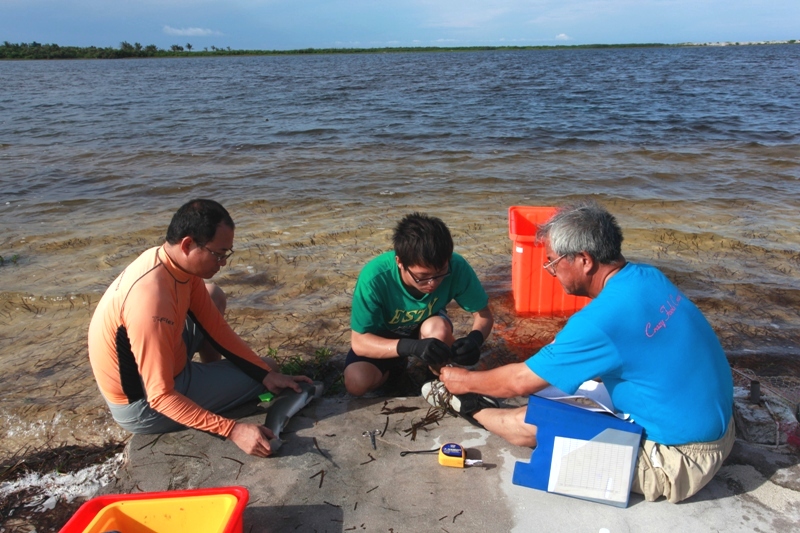
To further understand the lemon shark population at Dongsha Island, the Marine National Park Headquarters commissioned Professor Wang Chien-ping’s research team from the NCKU Research and Development Foundation in 2012 to conduct resource assessments. After more than a year of investigation, preliminary findings indicate that approximately 300–400 juvenile lemon sharks inhabit the waters around Dongsha Island, most measuring between 60–100 cm and within three years of age.
 |
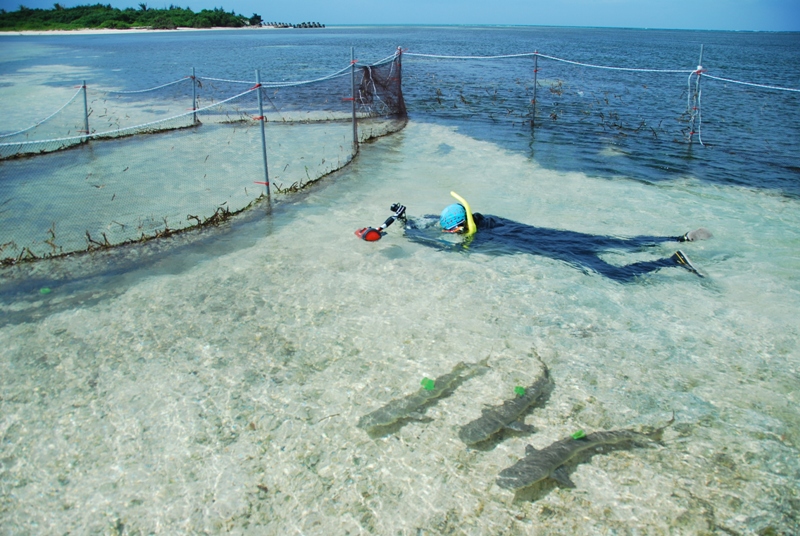 |
| Research team conducting shark morphometric measurements. (Photo credit: Chen Yu-yun) | Juvenile sharks are observed in holding nets after measurement and sampling before being safely released back into the sea. (Photo credit: Chen Yu-yun) |
Dongsha Island is surrounded by more than 1,000 hectares of seagrass beds. The island contains a small lagoon connected to the atoll lagoon through a channel, creating an ideal breeding habitat for lemon sharks. Adult sharks have been observed entering seagrass beds during spring, possibly for reproductive purposes. During warmer seasons, juveniles migrate along the coastline and enter the extensive seagrass beds during high tide to forage, making them particularly visible near the lagoon mouth on the western side of Dongsha Island. Genetic analyses further suggest that the lemon shark population has not undergone expansion, implying long-term residency in nearshore waters without extensive long-distance migration. The island’s geographic isolation has resulted in a distinct monophyletic lineage. Future research will continue to examine population status, movement patterns, reproduction, and behavior.
 |
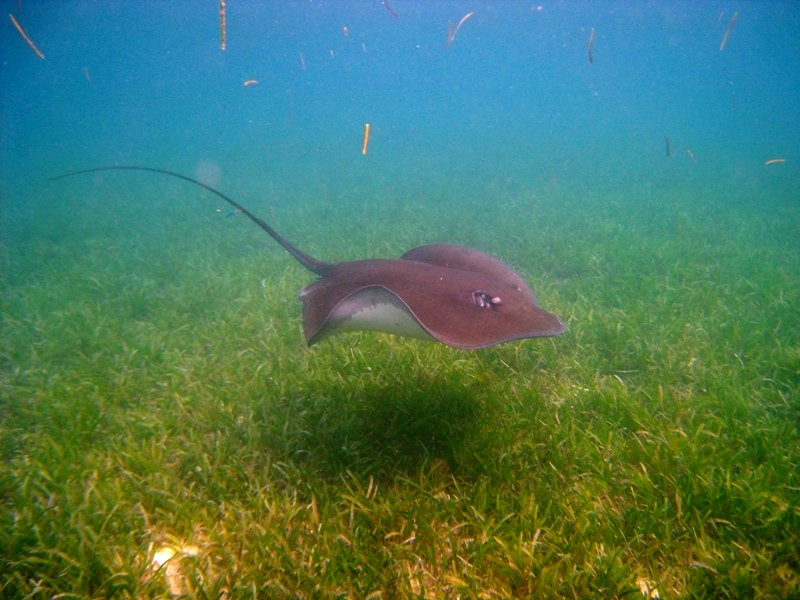 |
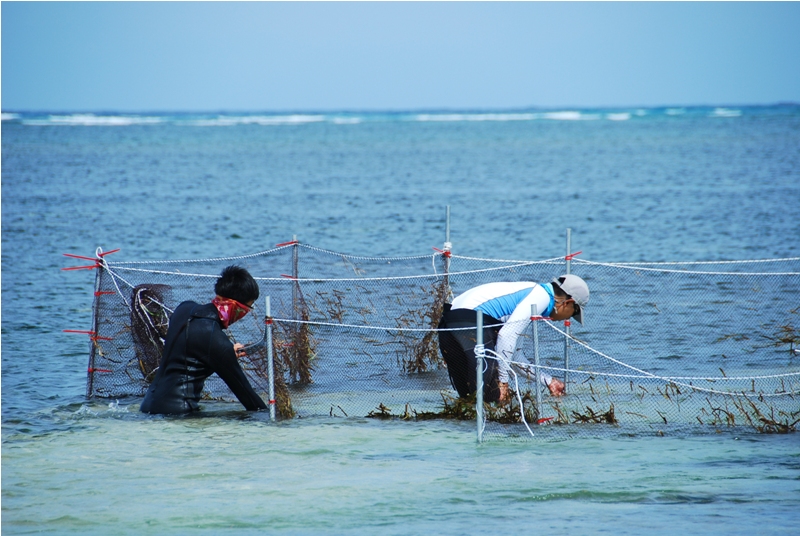
| Seagrass leaves present challenges during surveys, and researchers must clear nets filled with seagrass debris. (Photo credit: Chen Yu-yun) | Stingrays are also frequent inhabitants of seagrass beds. (Photo credit: Chen Hui-ju) |
Sharks play a crucial role in marine ecosystems and serve as guardians of ocean health. However, due to their high economic value, overfishing has occurred globally, disrupting marine ecological balance. Many countries have implemented shark conservation measures, such as establishing marine protected areas or protecting specific species. Dongsha Atoll National Park is currently one of the best locations in Taiwan to observe shark ecology and is also home to a rich diversity of cartilaginous fishes. Let us hope that Dongsha Atoll National Park will become a key conservation base for sharks in Taiwan, and through environmental education, inspire future generations to safeguard our marine resources.