


From April to May, red slime with foam and fishy smell accumulates the harbors. If you witness this scene for the first time, you might think it’s paint or oil of some leakage accidents. The red slime is in fact growing coral eggs. From April to May, sea water temperature rises. Most coral in Taiwan spawns gametes at night with tides. When the gametes being released into the water, the sperms and eggs depart. After a sperm or egg successfully combined with one another, the fertilized eggs grow into new coral.
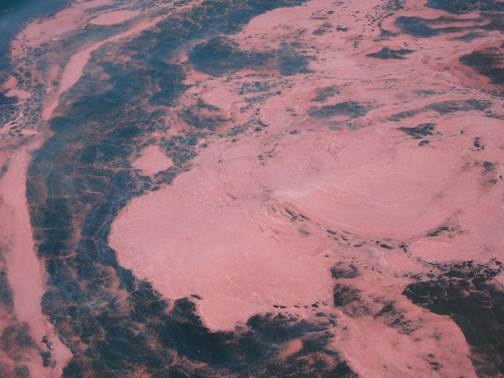
The red slime is actually coral eggs, not paint or pollution (photo by Zhu,Qiao-we,朱巧雯)
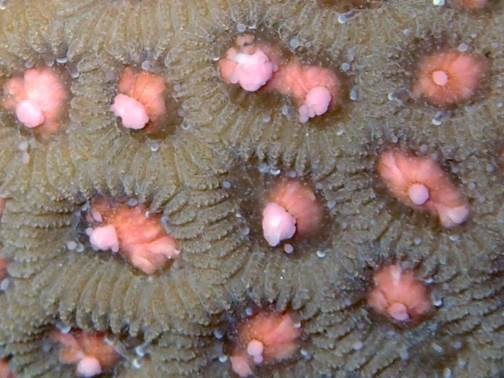
Most coral spawns sperms and eggs simultaneously (photo by Su,Bo-wei,蘇柏維)
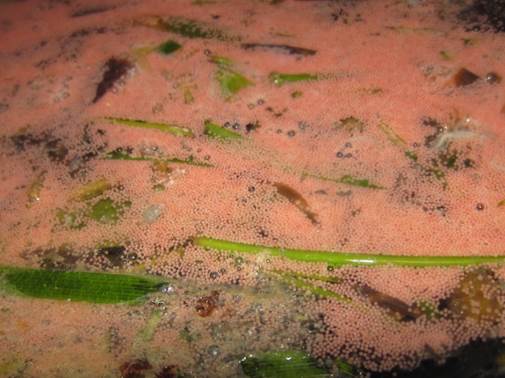
A swarm of coral eggs
Most coral spawns their sperms and eggs at nights within the same period. Coral eggs contain lots of oil. Therefore, the eggs can flow on the sea water. Tides and waves carry the drifting eggs, forming the red goo we see in the mornings. Take a closer look, the red slime consists of numerous coral eggs, which had been fertilized the nights before to start their cell divisions. Looking through the microscope, the fertilized eggs are not floating still, but whirling actively in the water. In the afternoons, the red slime disappears, indicating the drifting eggs have sunk from the surface into the ocean. When the eggs hatch, coral polyps grow into larvae with cilia and enter pelagic phase. The larvae attach themselves to ideal locations in the shallow sea, then they start asexual reproduction, which full grown coral does.
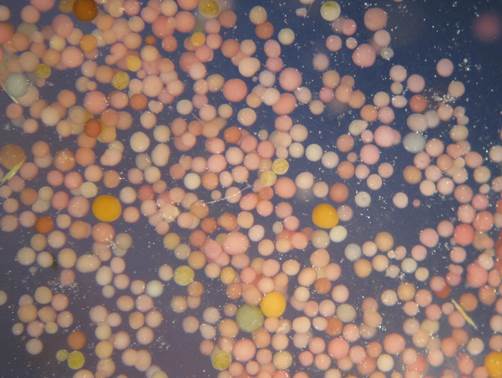
Looking into the microscope, coral eggs have various shapes and colors
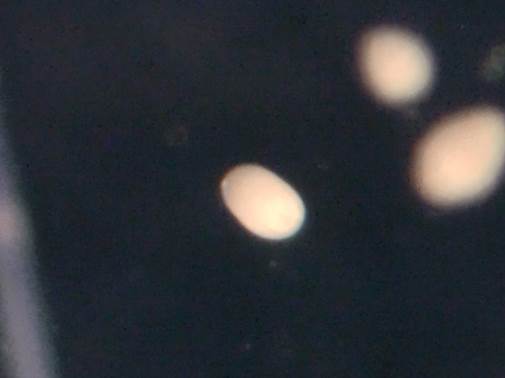
The larvae find their ideal habitats in the shallow sea
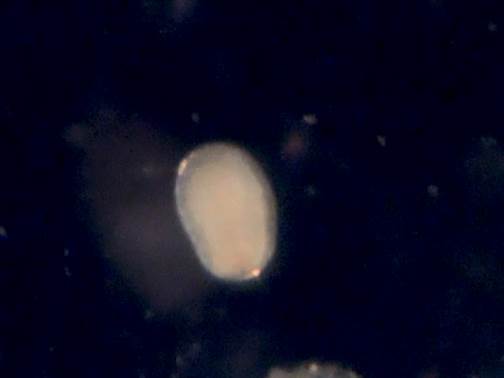
Coral Larvae