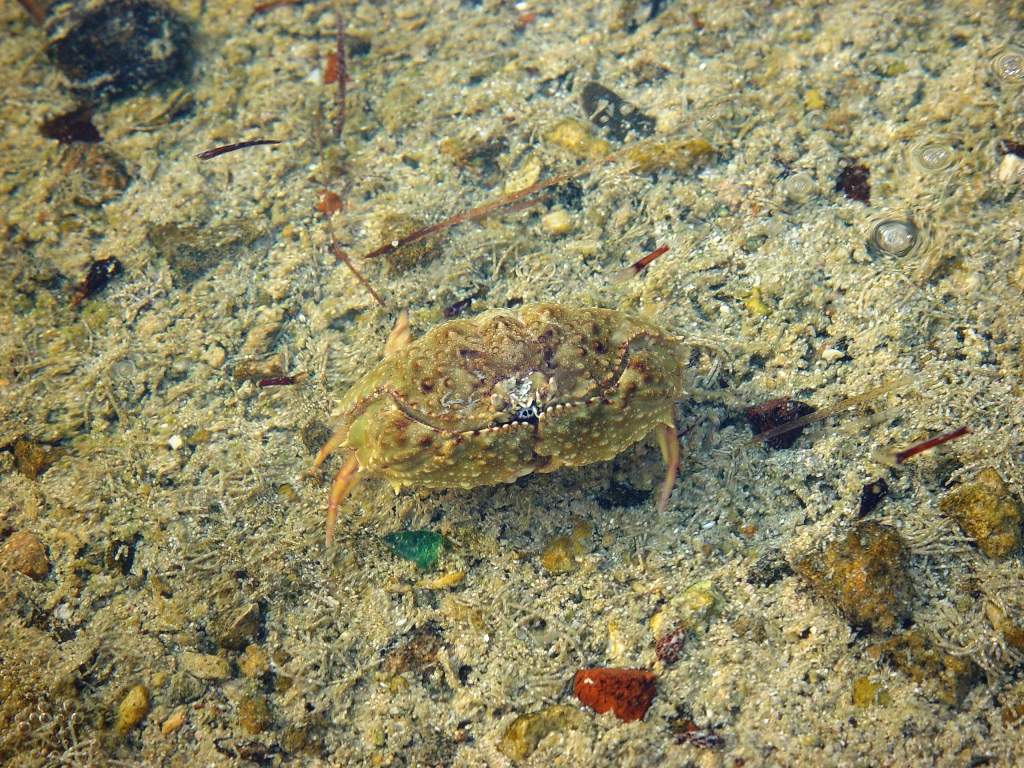


Compared with other box crab relatives, the liver-leaf box crab is slightly smaller and squarer in shape. Rather than resembling the large, round steamed buns of its relatives, it looks more like the small frozen buns sold in supermarkets. The liver-leaf box crab is widely distributed in sandy intertidal zones across the Indo-Pacific region, especially in sandy bottoms mixed with shells. Dongsha provides a preferred habitat type for them. However, they are not often seen because they are highly skilled at burrowing into the sand. Based on simple observations, they can completely disappear beneath the sand in less than five seconds.
Occasionally, when encountered along the lagoon shore—if they have not already hidden themselves—one may observe them moving sideways in shallow water in a distinctive zigzag pattern: first about one meter to the left, then one meter to the right. This movement is quite unique. The chelae (claws) of box crabs are highly specialized. Unlike typical crab claws that simply grasp objects, one claw is shaped like a can opener while the other functions as a hook. The hook securely holds a bivalve in place, and the “can opener” claw cuts open the shell. This may explain why they prefer sandy habitats rich in shells.