


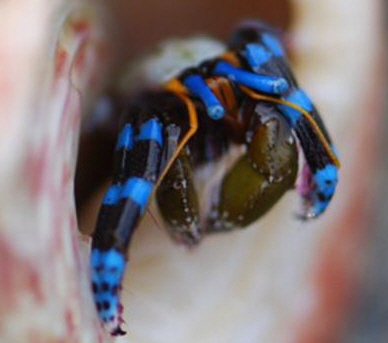
 Shrimps and crabs, belonging to the arthropod class Crustacea, exhibit bilateral symmetry and possess a hard exoskeleton primarily composed of chitin. This exoskeleton functions in defense, structural support, and water retention. Consequently, growth requires periodic molting. The body is divided into two main regions—the cephalothorax and the abdomen—and both the body segments and appendages are highly specialized. In the intertidal zone, hermit crabs are among the more easily observed crustaceans. Species in the family Diogenidae, for example, are often brightly colored and striking in appearance. Most inhabit marine environments and frequently climb over coral reefs, carrying beautifully patterned shells on their backs—an enchanting sight.