

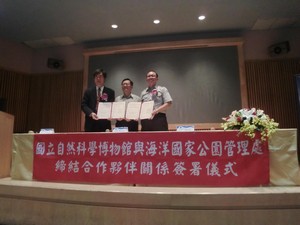
On April 19, the Marine National Park Headquarters (MNPH) held the 2013 Conservation Research Results Presentation for Dongsha Atoll National Park and South Penghu Marine National Park at the National Museum of Natural Science. The event began with the signing of a Memorandum of Understanding (MOU) between MNPH and the museum, witnessed by the Construction and Planning Agency and attending guests, marking a strengthened collaboration in marine ecological conservation research and environmental education.
Director Yang Mo-lin of MNPH expressed gratitude for the museum’s strong support and emphasized that the signing of the MOU establishes a close partnership between the two institutions. The National Museum of Natural Science possesses first-class specimen collection facilities, advanced multimedia exhibition and broadcasting equipment, and a broad visitor base. In the future, the museum will assist MNPH in curating and exhibiting collected research specimens. With the museum’s facilities and professional manpower, MNPH’s efforts in marine science popularization and environmental education are expected to become even more effective.
One of MNPH’s most significant conservation achievements has been transforming complex scientific literature into accessible popular science publications, including the Dongsha Coral Field Guide, Diving into the South Penghu Four Islands, and A Geological Journey through the South Penghu Four Islands. Through these publications, the general public can gain a deeper understanding of the environments and ecosystems of Dongsha and the South Penghu Four Islands. For this event, Professor Chen Wen-shan of National Taiwan University and researchers Yang Chih-jen and Yang Ching-min from the National Museum of Marine Biology and Aquarium were invited to share their research findings and introduce the new books, focusing on the basalt geology and coral reef ecology of the South Penghu Four Islands. A prize quiz session further enhanced public engagement, creating a lively and enthusiastic atmosphere.
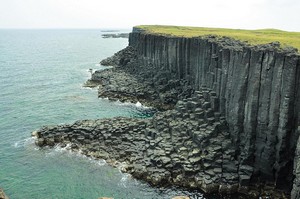
Major research findings from the past year include new discoveries regarding the evolutionary history of Dongsha Atoll. The northern atoll began accumulating approximately 8,000 years ago, but its structure differs somewhat from that of a typical atoll, leaving substantial room for further exploration. The lagoon entrance of Dongsha Island is dominated by shallow seagrass beds, providing excellent nursery grounds for adult sharks to breed and for juvenile sharks to forage and grow. Additionally, Dongsha Island’s vegetation, freshwater resources, and terrestrial habitats serve as important resting and feeding sites for migratory birds in East Asia. Meanwhile, the South Penghu Four Islands represent a natural geological classroom formed by basaltic volcanic eruptions millions of years ago. Submerged basalt formations now serve as substrates for coral growth, supporting vibrant underwater ecosystems and functioning as an important marine genetic reservoir for the Penghu region.
MNPH stated that Marine National Parks will continue to uphold conservation principles and conduct diverse research and monitoring efforts. Through positive and mutually beneficial cooperation with partners such as the National Museum of Natural Science, National Taiwan Museum, National Museum of Marine Biology and Aquarium, National Sun Yat-sen University, and the Penghu County Aquaculture Breeding Center, MNPH aims to cultivate marine professionals, integrate scientific research, and enhance educational and recreational services in Dongsha Atoll National Park and South Penghu Marine National Park. It also hopes to foster greater marine awareness among the public and promote sustainable environmental resource management. Those interested in MNPH’s interpretive publications may inquire and purchase them at National Bookstore outlets, Wu-Nan Bookstore, Youth Bookstore, Kaohsiung Wild Bird Society, National Taiwan Museum, and MNPH Visitor Centers (MNPH Tel: 07-3601898).
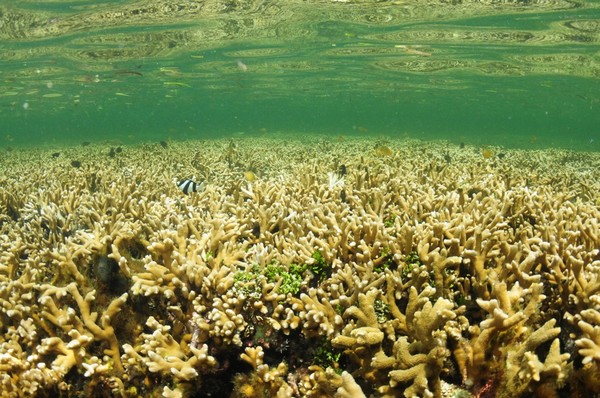
The reef flat of Dongsha is less than two meters deep, with excellent coral coverage.
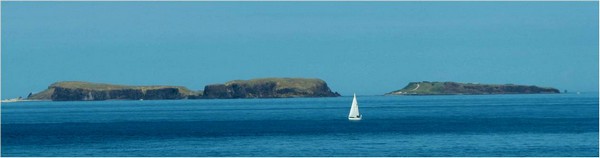
Mesa landforms formed by cooling basaltic lava.
 |
 |
|
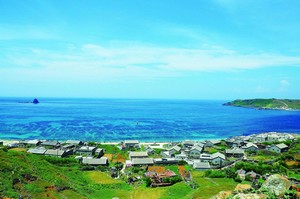
Traditional settlements in the South Penghu Four Islands are typically located in low-lying areas sheltered by terrain, facing water and backed by hills to avoid the strong northeast monsoon (Dongyuping, with Xiyuping in the upper right). |
Columnar basalt landscape of Xiji Islet. |
 |
 |
|
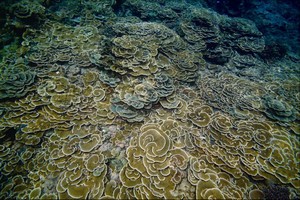
Layered foliose corals beneath Dongji Islet resemble Monet’s water lilies. (Photo by Yang Chih-jen) |
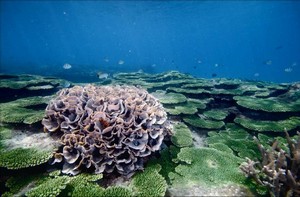
Coral reef communities in Xiyuping waters with over 50% coral coverage. (Photo by Yang Chih-jen) |
 |
 |
|
Director Sun Wei-hsin (left) and Director Yang Mo-lin (right) signed the MOU under the witness of Section Chief Liu Pei-tung (center). |
2013 MNPH Conservation Research Results Presentation held at the National Museum of Natural Science in Taichung, with enthusiastic public participation. |
 |
|
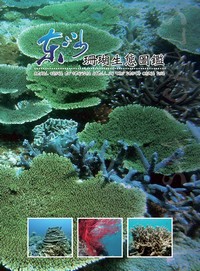 |
| Cover of “Diving into the South Penghu Four Islands” | Cover of “South Penghu Four Islands – A Geological Journey” | Cover of “Dongsha Coral Field Guide” |

Conservation and Research Division