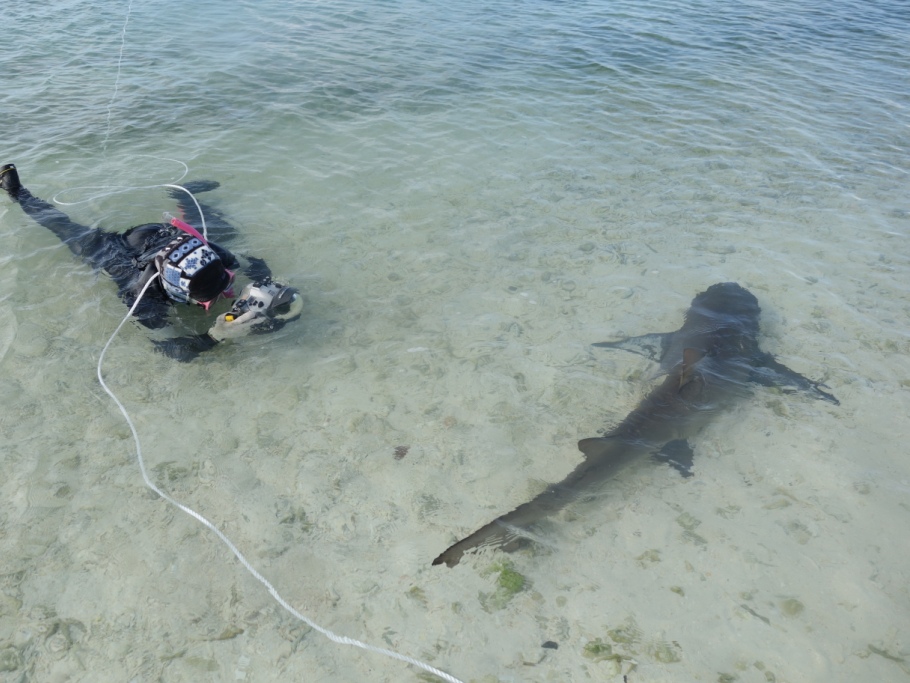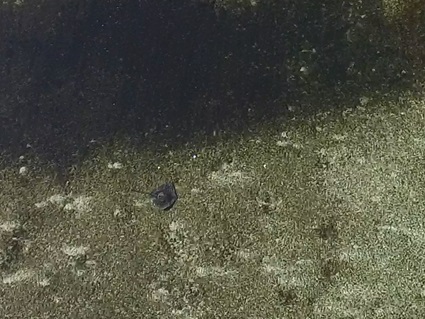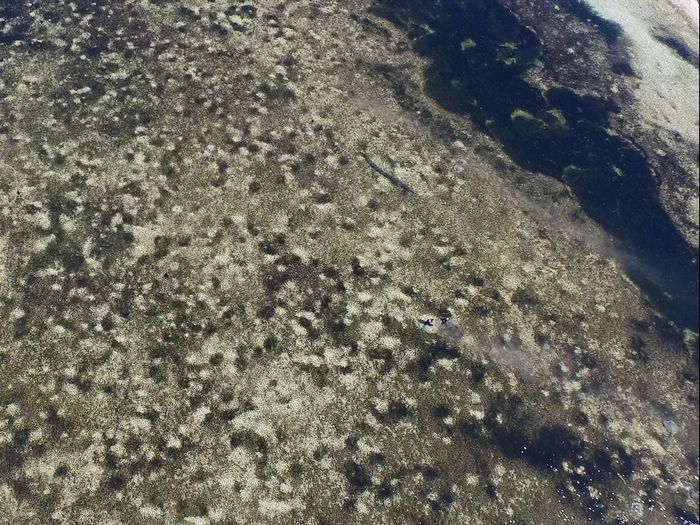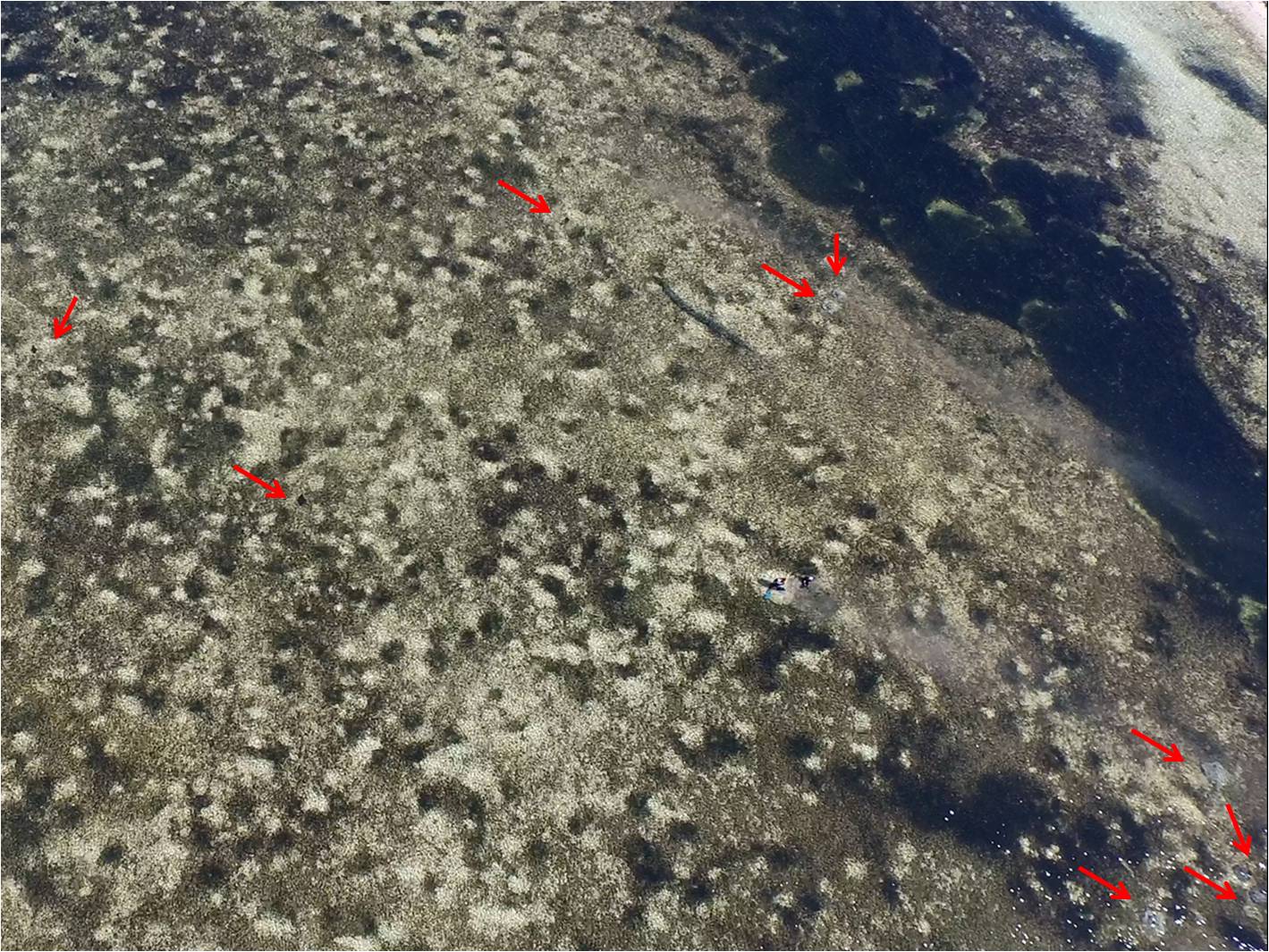


Our Headquarters commissioned a research team to conduct surveys on lemon sharks and other cartilaginous fishes. During aerial drone filming of the shallow waters surrounding Dongsha Island, researchers unexpectedly captured numerous stingrays appearing clearly in the footage, almost as if lining up for roll call. As a result, drone-based remote sensing has become a valuable assistant for marine ecological surveys.
In recent years, cartilaginous fish research in Dongsha has focused primarily on the ecology of lemon sharks. However, the shallow flats around Dongsha Island are also home to various other cartilaginous fishes, commonly including the pink whipray and eagle rays. Due to the high concentration of suspended particles in the lagoon waters of Dongsha Atoll, underwater visibility is often limited. In addition, species such as eagle rays are highly alert, making them difficult to observe. Therefore, in addition to diver-based underwater surveys, researchers have experimented with multiple methods, such as using nets or fishing gear to temporarily capture juvenile sharks (and rays) for external measurements and attaching acoustic transmitters to analyze their movement patterns. This year, Professor Chen Yu-yun’s research team from Aletheia University further experimented with high-altitude drone photography—leading to unexpected discoveries.
Juvenile lemon sharks, typically light gray in color, are difficult to detect from above when swimming over seagrass beds or sandy bottoms. In contrast, darker gray-black stingrays are more visible due to their larger size and greater color contrast against shallow waters. From aerial footage, researchers were able to roughly distinguish species based on body size—from rays as small as 30 centimeters to those exceeding 1 meter—and capture images for counting. The extensive shallow flats at the mouth of Dongsha Lagoon were thus revealed to be not only feeding grounds for lemon sharks, but also important social gathering areas for rays of various sizes. Eagle rays are often seen in small groups, while pink whiprays tend to forage alone. Interestingly, aerial images also showed that eagle rays—normally considered wary and difficult to photograph—frequently appear near researchers, suggesting their numbers may be more abundant than previously estimated.
Nevertheless, drone usage remains subject to environmental limitations, especially when filming over water. Factors such as sunlight reflection, strong winds at altitude, and battery life must be carefully considered. Moreover, current drones are not waterproof, requiring cautious operation to prevent equipment damage. At present, drone applications for marine surveys in Dongsha waters are still in their early stages. However, this technology will continue to be used in cartilaginous fish research, with the hope of uncovering more secrets of fish behavioral ecology.