

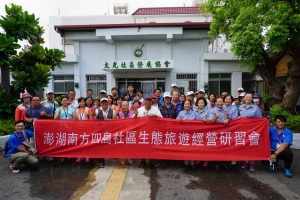
The Marine National Park Headquarters, in collaboration with the Penghu County Government, Wang’an Township Office, and Kenting National Park Headquarters, held the “South Penghu Four Islands Community Ecotourism Management Workshop” from September 19 to 20. Residents from Dongji Village and Dongping Village of South Penghu Marine National Park were invited to visit distinctive communities within Kenting National Park, including Daguang, Gangkou, and Sheding, for study and exchange. Kenting National Park shared its practical experiences in promoting community-based ecotourism, with the aim of strengthening community participation and conservation consensus, and building partnerships between the national park and local communities.
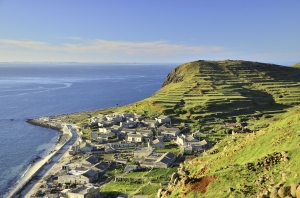
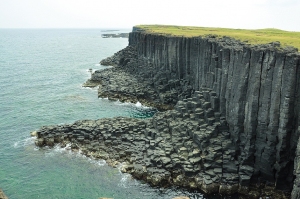
South Penghu Marine National Park, Taiwan’s ninth national park, features globally significant basalt geological landscapes, endemic plant species, protected wildlife, precious coral reef ecosystems, and distinctive terraced vegetable garden cultural landscapes. These diverse resources make it highly suitable for ecotourism development. Historically, most residents of the four islands relied on fishing for their livelihoods. However, due to transportation limitations and employment challenges, many residents have relocated to Magong, Kaohsiung, or Tainan for work and residence. As a result, the current island population is predominantly elderly. Encouraging local participation and strengthening community identity to promote ecotourism development has therefore become an important issue.
 |
 |
|
Figure 1. Group photo of the ecotourism workshop at Daguang Community. |
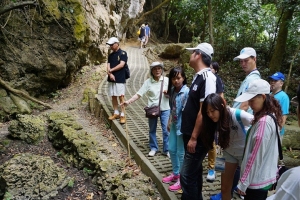
Figure 2. Ecological guided tour at Sheding Community. |
Kenting National Park, established in September 1982 as Taiwan’s first national park, has actively carried out conservation and restoration work. Because many communities and indigenous settlements coexist within and adjacent to the park, building partnerships has been essential. Over the years, the Kenting National Park Headquarters has continuously promoted community empowerment programs, assisting local residents in transitioning toward diversified ecotourism industries. This approach has fostered community recognition and participation in national park affairs. In recent years, numerous mutually beneficial partnerships have been established with communities such as Sheding, Gangkou, Shuiwaku, Manzhou, Lide, and Daguang, all of which have become successful models of community-based ecotourism in Kenting.
According to the Marine National Park Headquarters, a total of 42 residents and township officials participated in the workshop. The program included three seminar sessions: experience sharing by Kenting National Park Headquarters and Satoyama Ecological Company on community guidance, and an introduction and outlook on the Houbihu Marine Resource Protection Demonstration Area. Participants also engaged in ecological guided tours in Daguang, Gangkou, and Sheding communities. Through sharing Kenting’s successful experiences in community ecotourism development and providing hands-on ecotourism experiences, the workshop aimed to strengthen community participation and conservation consensus, and to build enduring partnerships between the national park and local communities.
 |
 |
|
Figure 3. Settlement and terraced vegetable garden landscape of Dongyuping Islet. |
Figure 4. Columnar basalt formations on Xiji Islet. |