

On May 14 (Saturday), the Marine National Park Headquarters (hereinafter referred to as “the Headquarters”) held the “Penghu South Four Islands Ecotourism Management Workshop.” The itinerary included visits to the Qigu Black-faced Spoonbill Ecology Exhibition Hall, Taijiang National Park, the Sicao Mangrove Ecological Area, and a cetacean museum. Local residents of the Penghu South Four Islands were invited to participate in this on-site visit to Taijiang National Park. Through learning about national park ecotourism industries and engaging in mutual exchanges, the activity aimed to dispel the common misconception that national parks are solely for environmental protection.
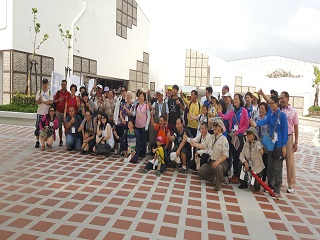
Residents of the Penghu South Four Islands taking a group photo at Taijiang National Park plaza.
During the visit, the Taijiang National Park Headquarters introduced the cultural documentation of the milkfish industry in the Taijiang area, including the unique “milkfish counting songs” associated with the industry. Residents from the Four Islands raised issues concerning traditional fishing culture, national park management, and the environmental impacts caused by tourists. Through dialogue, both civil society and government representatives were able to share perspectives on ecological and cultural values, and jointly reflect on how to balance tourism development and traditional culture while ensuring the protection of ecological resources.
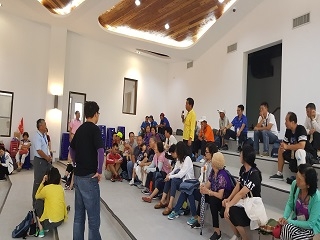
Residents of the Penghu South Four Islands asking questions about traditional fishing and national park management.
In the afternoon, residents visited the Sicao Mangrove area and experienced the mangrove ecosystem by bamboo raft, learning how local communities balance mangrove conservation with ecotourism development. The following day, residents toured several tourism factories and the Jingliao community in Tainan to gain insights into tourism operations and community revitalization, providing inspiration for future tourism development and community-building initiatives in the Four Islands.
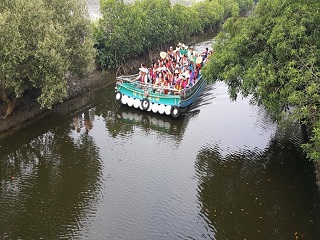
Residents of the Penghu South Four Islands experiencing the charm of mangroves by bamboo raft.
Promoting Inter-Island Exchange and Learning
In fact, in September of last year (2015), with the active cooperation of the Headquarters and the two village chiefs of the South Four Islands, residents visited Kenting National Park. Both exchange activities aimed to provide opportunities for industrial learning in different regions. Through these visits, residents’ sense of community participation was inspired. Although only a small number of residents currently live on the islands, each plays a vital role in advancing ecotourism and sustainable development in the Penghu South Four Islands.
Dongji and Xiji Islets of the South Four Islands once served during the Qing Dynasty as important navigation markers along the maritime route between Xiamen and Luermen, guiding ships across the treacherous “Black Water Ditch.” Dongji Islet was once a thriving trading hub and, during the Japanese era, housed stationed troops and a lighthouse; many Japanese-style architectural remains still exist today. Xiji Islet, however, became uninhabited after government-led relocation due to limited living facilities. Dongyuping and Xiyuping were developed later. Due to harsh environmental conditions and feng shui considerations, stone towers and monuments were often erected to ward off misfortune and pray for safety. Windbreak walls built primarily from basalt and supplemented with coral limestone encircle agricultural plots known as “vegetable houses,” with Dongyuping’s large terraced vegetable fields along the mountainside representing a distinctive agricultural and cultural landscape of the South Four Islands.
Owing to the rich and diverse ecosystems of the South Four Islands—including abundant coral reefs, protected wildlife, unique basalt geology, and significant historical and cultural landscapes—the Penghu South Four Islands National Park was established on June 8, 2014, to safeguard marine environments and preserve local architectural and cultural heritage. The establishment of Taiwan’s ninth national park carries high public expectations for marine ecological conservation.
A Sustainable Mission to Bring Residents Home
Nearly two years after the park’s establishment, most original residents have relocated to Penghu’s main island or nearby cities such as Tainan and Kaohsiung due to limited living facilities. For example, although more than 200 people are registered on Dongji Islet, only a dozen or so reside there permanently. With the national park’s establishment, tourism has gradually developed. As the Headquarters actively promotes local management, integrating local residents’ participation in conservation efforts remains a crucial long-term task. More importantly, preserving and restoring cultural landscapes and historic architecture ensures the continuation of unique island traditions and customs, shaping a truly distinctive national park.
Conservation and development are like two sides of a double-edged sword; to complement one another, they must be built upon consensus between government and local communities. Through various industrial learning initiatives, the Headquarters seeks to strengthen community empowerment, encourage residents to value their hometowns, consolidate local resources, foster cultural creativity, and create employment opportunities. By attracting younger generations to return and invest in their hometowns, community-based development integrated with ecological management can drive the sustainable growth of the Penghu South Four Islands. Only through joint efforts by government and civil society can meaningful change occur, guiding the national park toward becoming a truly sustainable island rich in ecological and environmental value.
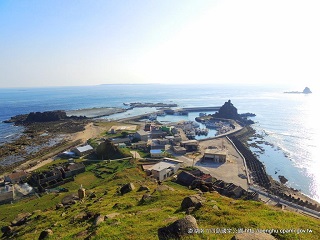
The Headquarters actively promotes the integration of government resources with community livelihoods.