

Penghu South Four Islands National Park, established in 2014, is founded upon three core conservation values: basalt geological landscapes, coral reef marine ecosystems, and traditional historical architecture. Both its natural and cultural resources are precious and unique. Due to the historical development of maritime routes between Taiwan and Penghu, distinctive cultural, historical, and settlement patterns emerged that differ from present conditions. To promote and strengthen the unique conservation value of the park’s cultural and historical resources, the Marine National Park Headquarters organized the “Taiwan–Penghu Maritime History Lecture Series” from July to November this year. Through perspectives such as regional development, human activities, and architectural and settlement evolution, the lectures explored the developmental context and transformations of the southern Penghu islands.
This lecture featured Research Fellow Liu Yi-chang from the Institute of History and Philology, Academia Sinica, who shared insights on “Early Human Activities and Changes in Taiwan and Penghu.” Drawing from historical research and the evolution of human activities, he examined archaeological sites from “artifacts” to “people,” from “cultural contexts” to “natural expressions,” continually exploring prehistoric migration, interaction, and environmental resource use along Taiwan’s southwestern coast and in Penghu. The relationships between archaeological relics and sites, buried across different spaces, resemble a “wordless history book frozen in time and space.”
The Sea Is Not a Barrier, but a Pathway
Taiwan encompasses two major cultural systems: the continental Han culture and the maritime Austronesian culture. As an island nation, Taiwan’s life has always been closely connected to the sea. Since prehistoric times, cultural interaction circles existed between the mainland and Taiwan. With the onset of the Age of Exploration in the sixteenth century, Penghu and Taiwan became important transit points for routes to Southeast Asia. By the early Qing Dynasty in the seventeenth century, they had become key markers along the official maritime passage between Fujian and Taiwan, guiding ships across the treacherous “Black Water Ditch.”
Maritime transportation fostered the prosperity of foreign trade and connected the southeastern coast of mainland Asia, Taiwan, Penghu, and countries across the South China Sea. Maps spanning six thousand years reveal the geomorphological changes of Taiwan’s southwestern plains. The “Taijiang Inner Sea” and “Daofeng Inner Sea” functioned as gateways for human culture to enter the southwestern lagoon plains of Taiwan—serving as inland seas between the mainland interior and the open ocean. This perspective reflects how Taiwan’s culture has been deeply influenced by overseas interactions since the Neolithic era.
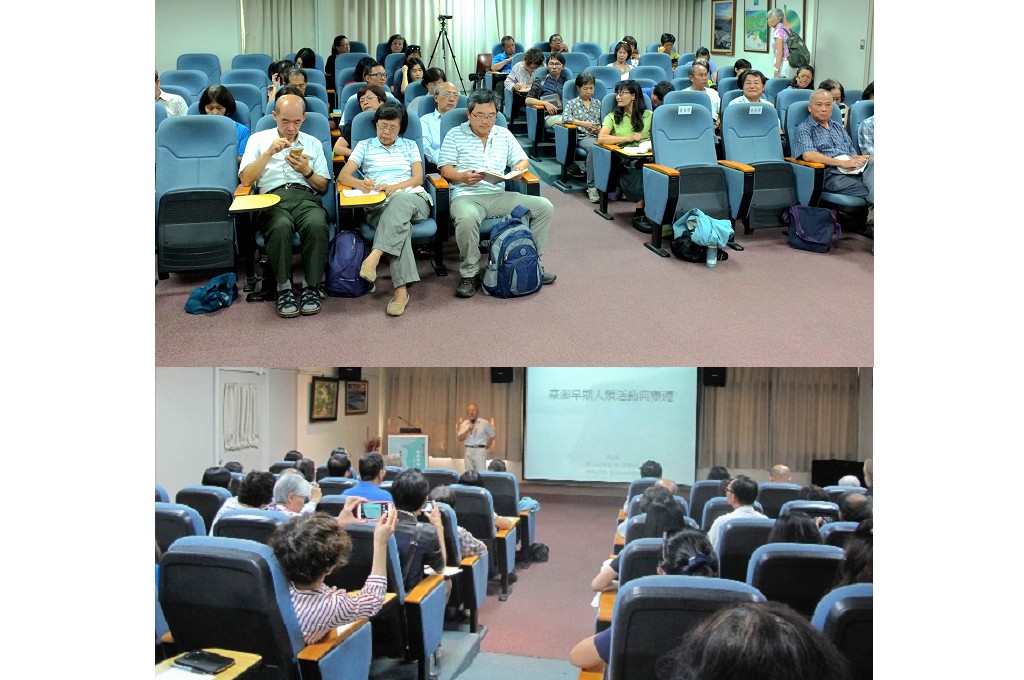
Strong public participation in the Taiwan–Penghu Maritime History Lecture.
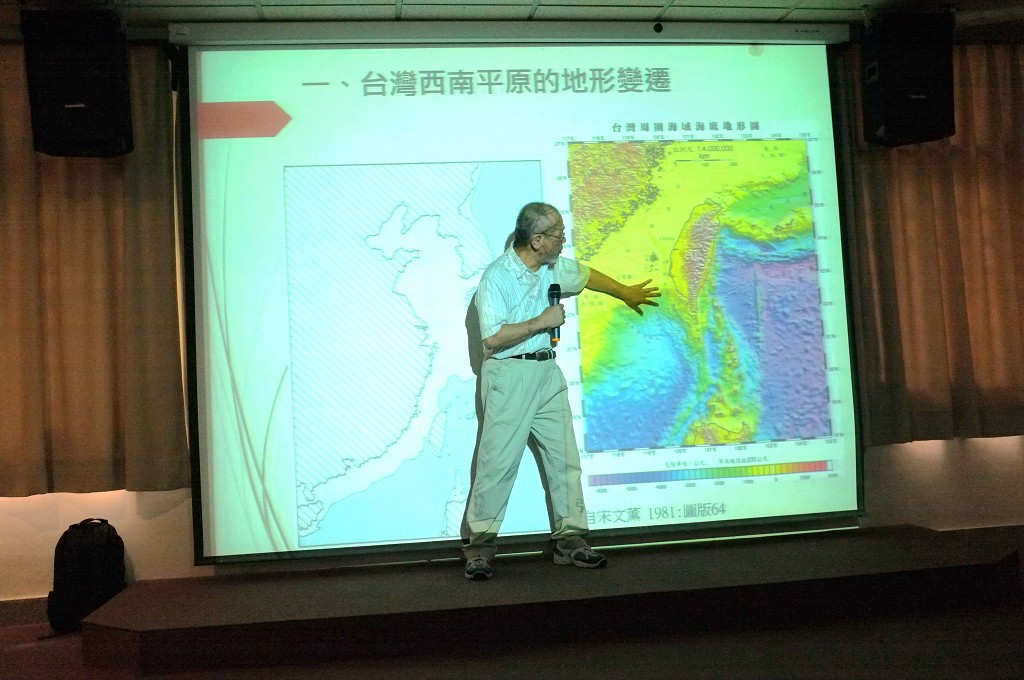
The speaker explaining changes in Taiwan’s southwestern plains using maps.
According to archaeological and geological research, the prehistoric transformations of Taiwan’s southwestern coast—particularly in the Daofeng and Taijiang Inner Seas and adjacent plains—can be divided into four stages corresponding to human cultural development: the Dabenkeng Culture period, the Corded Ware Red Pottery Culture period, the Dahu Culture period, and the Niaosong Culture period. Sites from the Dahu Culture period often contain large shell middens, indicating long-term utilization of marine resources. The relatively stable conditions of the inner seas also appear to have facilitated frequent maritime exchanges with external regions.
By the late Neolithic era, complex transportation and exchange systems had already developed. Residents of Taiwan used jade to trade by sea with peoples in India and Pacific islands in exchange for glazed beads and glass. In Penghu, the Guoye-type culture—characterized by maritime subsistence—emerged, alongside the flourishing Suogang-type culture. Situated at the forefront of the Asian continent, the Penghu archipelago has long been a crossroads of human migration. The large accumulations of stone tool debris discovered at Donghu and Northwest Bay on Qimei Island provide evidence of close interactions between Austronesian-speaking peoples, the Yue ethnic groups, and Penghu.
Based on these archaeological findings, the marine areas within Penghu South Four Islands National Park encompass layered historical depth across time and space. Archaeological sites reveal patterns of transformation, and by examining human activity over longer temporal scales, we gain a deeper understanding of the cultural meanings embedded in these waters. As Research Fellow Liu aptly stated, “The sea is not a barrier, but a pathway.”
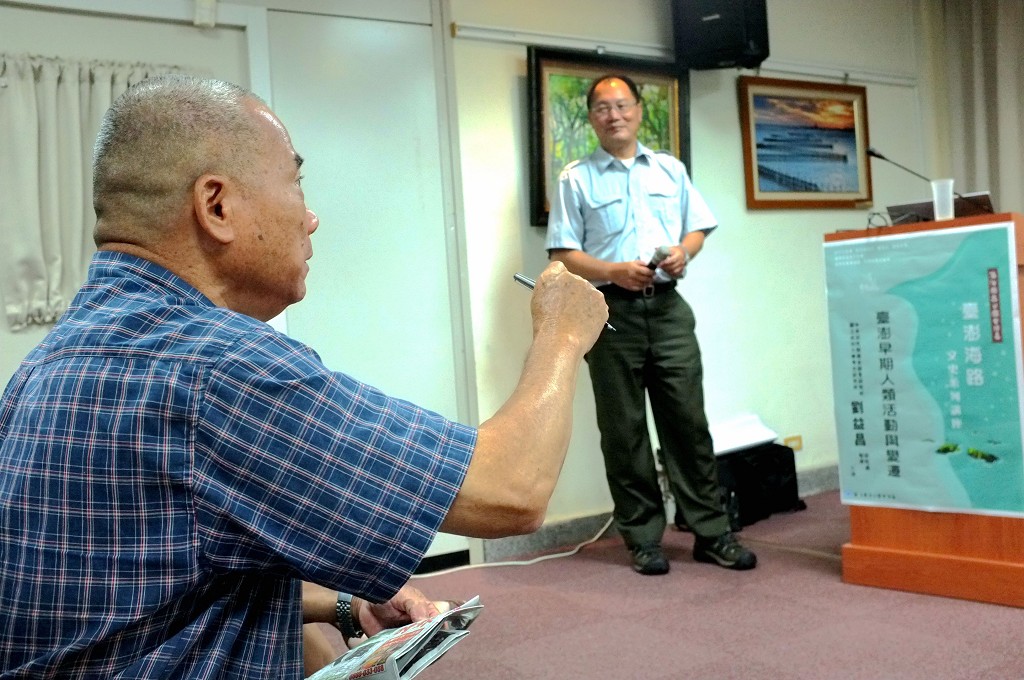
Enthusiastic audience feedback.
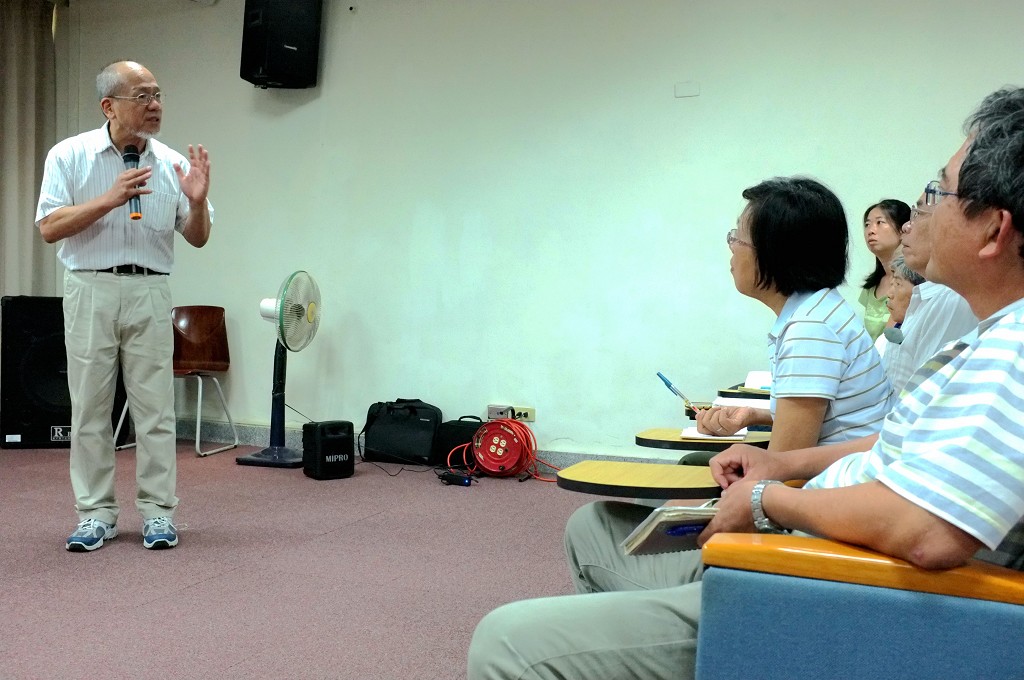
The speaker responding thoroughly to participants’ questions.