

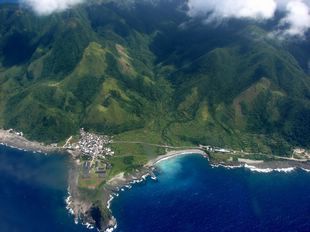
The Marine National Park Headquarters (hereinafter referred to as the Headquarters) notes that Lanyu Island possesses abundant and precious natural resources. For hundreds of years, the Tao (Yami) people have practiced a sustainable lifestyle that harmonizes with nature, allowing Lanyu to retain its pristine landscape to this day. Visitors are therefore urged not to damage the natural environment when entering Lanyu. In addition, the Tao people maintain their own calendar system and seasonal rituals, with many cultural taboos embedded in daily life. Visitors should approach the island with respect and learn about its customs before participating in or observing local traditions. During traditional ceremonies, please respect local customs and avoid disturbing rituals or disrupting order. For example, during the flying fish season (approximately February to June), there are many taboos: female visitors should not touch the hulls of traditional boats, and visitors in general should not board boats casually for photographs; if a funeral is taking place in a village, tour guides should lead groups quietly past the bereaved household without loud noise; the “Chessboard Tree” is regarded as a sacred or spirit-associated tree, and its branches or leaves should not be brought into residents’ homes or placed on traditional plank boats; oranges should not be brought to the seaside (especially during flying fish season); and pregnant women should not touch boats. Visitors are encouraged to read relevant books or research Lanyu’s travel information and cultural customs online before visiting. With basic understanding and guidance from local interpreters, travelers can experience a rich and meaningful ecological and cultural journey in Lanyu.
Flying fish and the ocean form the foundation of the Tao people’s worldview. The Tao divide the year into three seasons according to flying fish harvesting activities.
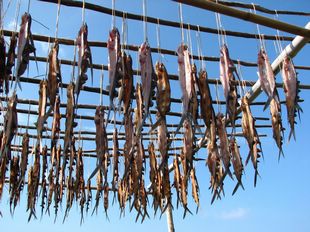
When coral trees bloom, it signals the arrival of the flying fish season (approximately February to June). Flying fish arrive in the waters around Lanyu with the Kuroshio Current. Each village holds a ceremonial “Calling of the Fish” ritual on a designated day at the shore to announce the start of the season. During this period, men focus primarily on catching flying fish and migratory species, while refraining from catching coral reef and bottom-dwelling fish. Women assist by cleaning the flying fish, and each village has its own specific methods for processing and drying them. Before the Crab Festival (around April), women catch crabs and keep them in pots until the festival day, when they prepare taro cakes and crab dishes to honor the men’s efforts during the fishing season.
From approximately July to September, when flying fish harvesting ends, coral reef fish may be caught. This is also the time when men gather firewood, tend orchards, or collect clay from the mountains to make pottery jars and lime.
From about November to January is the waiting season for flying fish, when Lanyu becomes especially tranquil. Residents often engage in handicrafts or agricultural work during this time.
Overall, the Tao people’s concept of a “year” begins with waiting for flying fish, continues through the fishing season (Flying Fish Festival), and concludes with the End-of-Season Ceremony. Numerous taboos have evolved around these stages, and by following their seasonal calendar, the Tao people regulate work and resource use. These customary restrictions have also contributed to the continued reproduction and conservation of many species on Lanyu.
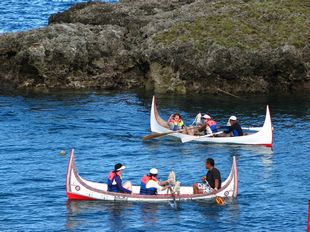
According to the Lanyu Township Office, the calendar derived from flying fish underscores their central importance to Tao life and culture. Facing the ocean and the annual arrival of flying fish, the construction of traditional plank boats (tatala) is not only essential for livelihood and survival, but also symbolizes social status and authority. The launching of a large boat and the completion of a new house are both regarded as great honors demonstrating a family’s prosperity and success. Hosts prepare large quantities of taro and pork to share with relatives and friends, showcasing diligence and wealth while elevating the male head of household’s social standing. Stacking ceremonial taro on the boat also symbolizes abundance and protection against evil. Notably, whether celebrating a boat launching or a house completion, ceremonies are conducted through elegant chanting that lasts throughout the night. In the first half of the night, guests sing praises and blessings for the host; in the latter half, participants freely sing about personal or ancestral achievements. This ritual form is one of the most distinctive features of Tao culture.
The Headquarters further notes that visitors to Lanyu can experience plank boat culture and witness the unique sight of traditional boats navigating the beautiful ocean. The surrounding coastal waters are clear, with abundant coral reefs and fish resources, making them suitable for marine experiences and environmental education activities. Water temperatures are suitable for diving year-round, though attention must be paid to wind direction and tides. Recommended dive sites on the west coast include Frog Rock, Airport Outer Reef, and the Hongtou Shipwreck; on the northeast coast, sites include Jade Maiden Rock, Hen Rock, and the Outer Reef of Twin Lions Rock. Although many visitors who dive in Lanyu are experienced swimmers and divers, it is strongly recommended to hire a local dive guide to ensure personal safety.
 |
 |
 |
 |