

Have you ever imagined what human life would be like if one day the world’s oceans disappeared?
To promote marine environmental conservation and education, the Marine National Park Headquarters organized a Marine Conservation Lecture Series from March to October this year. Covering topics such as climate, fisheries, aquatic plants, sea turtles, and cetaceans, the series explores in depth the impacts and consequences facing the marine environment. It aims to encourage every member of this island nation to contribute to protecting the Earth.
The first lecture focused on the dual impacts of global change and the ocean. “Global change” affects more than just temperature fluctuations; it encompasses climate change, shifts in terrestrial and marine productivity, alterations in atmospheric chemistry, changes in water resources, and ecosystem transformations. Whether caused by natural processes or human activities, these global environmental changes ultimately influence all life sustained on Earth.
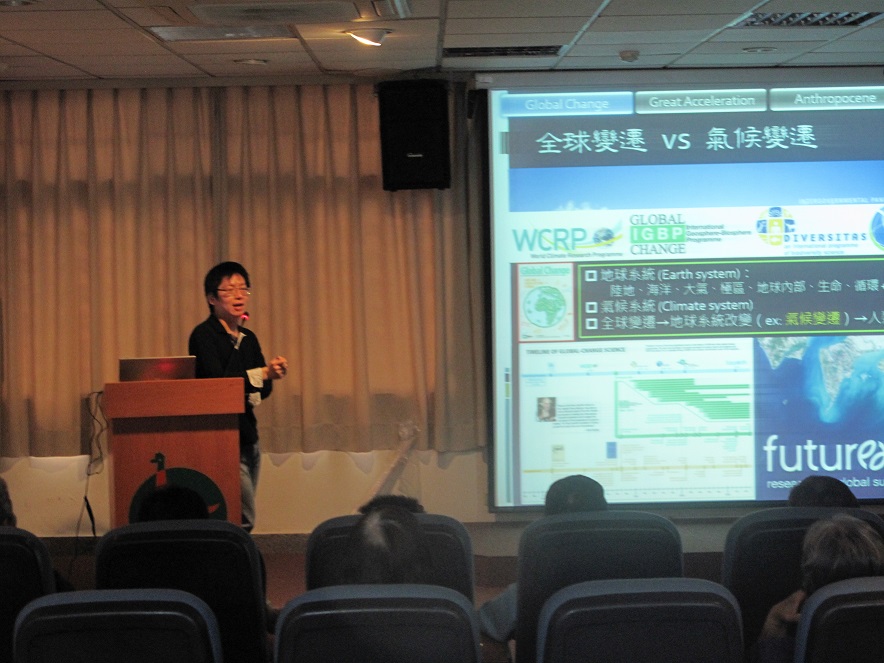
The March 20 Marine Conservation Lecture Series focused on “Global Change.”
Among these impacts, damage caused by human behavior accounts for the vast majority. Yet people often focus only on immediate enjoyment, ignoring the harsh realities behind the glamorous surface. The speaker cited the famous beaches of Tuscany as an example: their seemingly “white” sands and “azure” waters have in fact long been polluted by nearby chemical plants. The agricultural droughts currently affecting many parts of the world are also linked to damage inflicted upon the oceans.
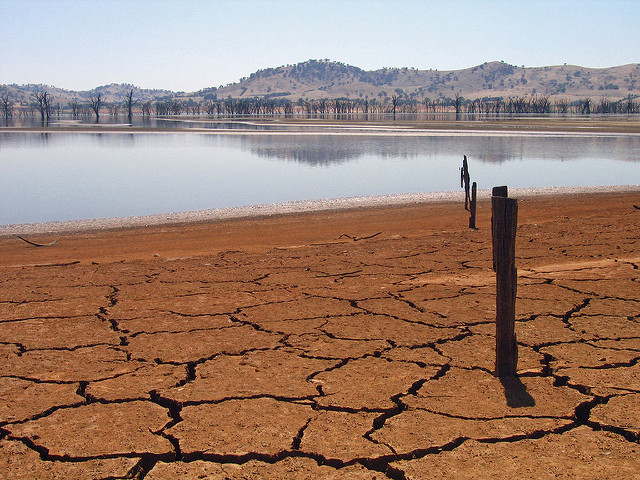
When the ocean is harmed, agricultural drought becomes a serious global issue (Photo from Flickr, Creative Commons; by Tim J Keegan).
Once the world’s fourth-largest lake, the Aral Sea—straddling present-day Kazakhstan and Uzbekistan—was transformed into a barren desert due to excessive water diversion for agricultural irrigation. As river inflows decreased and salinity increased, fish lost their spawning and feeding grounds, devastating fisheries and shipping industries. Ironically, the shrinking and exposed seabed, once a water source for human use, became covered with salt and agricultural pesticides carried from surrounding farmland. When strong winds sweep across the region, these salts and pollutants are blown into densely populated areas, inhibiting plant growth and causing respiratory illnesses among local residents.
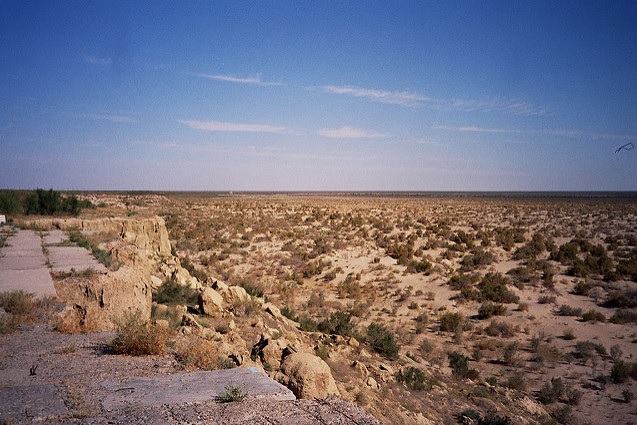
The desiccated Aral Sea (Photo from Flickr, Creative Commons; by upyernoz).
The Colorado River, one of the United States’ most important water resources and a primary source of freshwater for California, has also suffered from over-extraction and the daily influx of nearly 110,000 gallons of radioactive groundwater. The river has nearly run dry, and its depletion has had severe consequences for California’s agriculture.

The Colorado River, a vital U.S. water resource, was listed in 2015 as the most endangered river (Photo from Flickr, Creative Commons; by Mia & Steve Mestdagh).
Climate change has directly altered the global environment. Humans are both the primary perpetrators and the victims, with livelihoods and economies suffering severe impacts. If the oceans were to disappear due to global change, the consequences would extend far beyond marine life—no species on Earth would be spared. Over the past 500 million years, asteroid impacts have triggered five catastrophic mass extinctions. Today, scientists warn that the sixth mass extinction may be driven largely by human interference and destruction.
Reflect carefully: when we still wear heavy sweaters in spring and complain about endless rain and erratic temperature changes, these are merely small warning signs of nature’s backlash. Global change is not just a subject for scientific data and research—it is an ecological issue that all humanity must confront and strive wholeheartedly to protect against.