


Dongsha Atoll is a complete coral reef system with a uniquely rich marine environment and high biodiversity, serving as a key habitat for marine resources in the South China Sea and Taiwan. However, during the global coral bleaching event of 1998, the atoll’s coral reef ecosystem suffered severe damage. To safeguard this important habitat and establish a marine ecological corridor, the Marine National Park Headquarters (hereinafter referred to as MNPH) has actively promoted marine conservation and restoration efforts since its establishment in 2007. Over the years, our restoration strategy has aimed to establish ten coral fragment transplantation sites within Dongsha Atoll. By connecting these sites through a point-line-area network, we seek to increase the effective coral population size and ultimately enable natural recovery through sexual reproduction, thereby creating a suitable habitat for diverse marine life. In addition, through cross-disciplinary collaboration, restoration efforts for herbivorous species have been carried out. Giant clams and trochus snails have been successfully cultivated and, once reaching appropriate sizes, released into nearby waters, achieving notable results over the years.
Each year, around Mazu’s birthday (the 23rd day of the 3rd lunar month), coral spawning occurs within approximately one week of this date. This event is of great significance for restoration and conservation efforts at Dongsha Atoll. In preparation for this annual phenomenon, MNPH researchers begin monitoring seawater temperature from April onward and conduct microscopic examinations to observe the development of coral gonads, closely tracking spawning conditions.
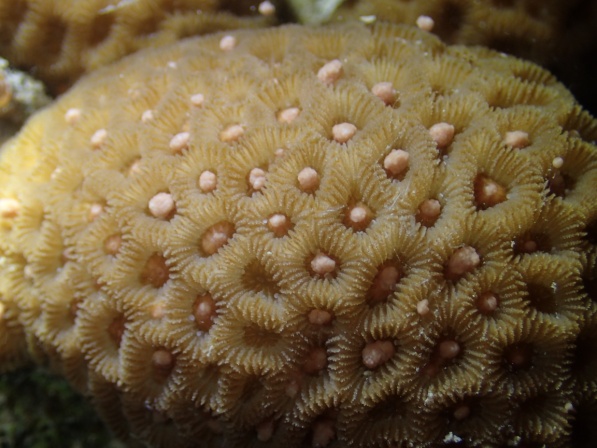
Chrysanthemum coral about to release eggs on the northern shore of Dongsha Island
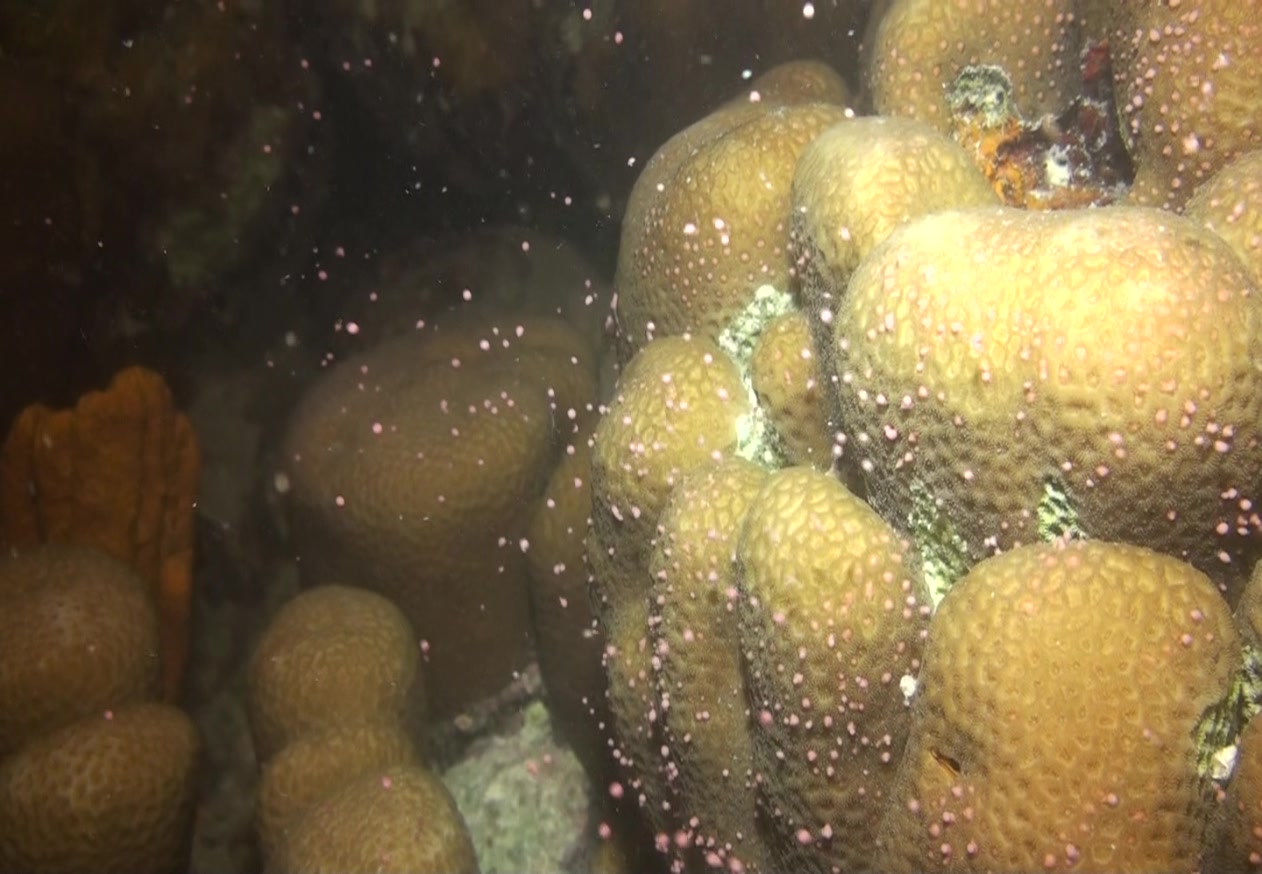
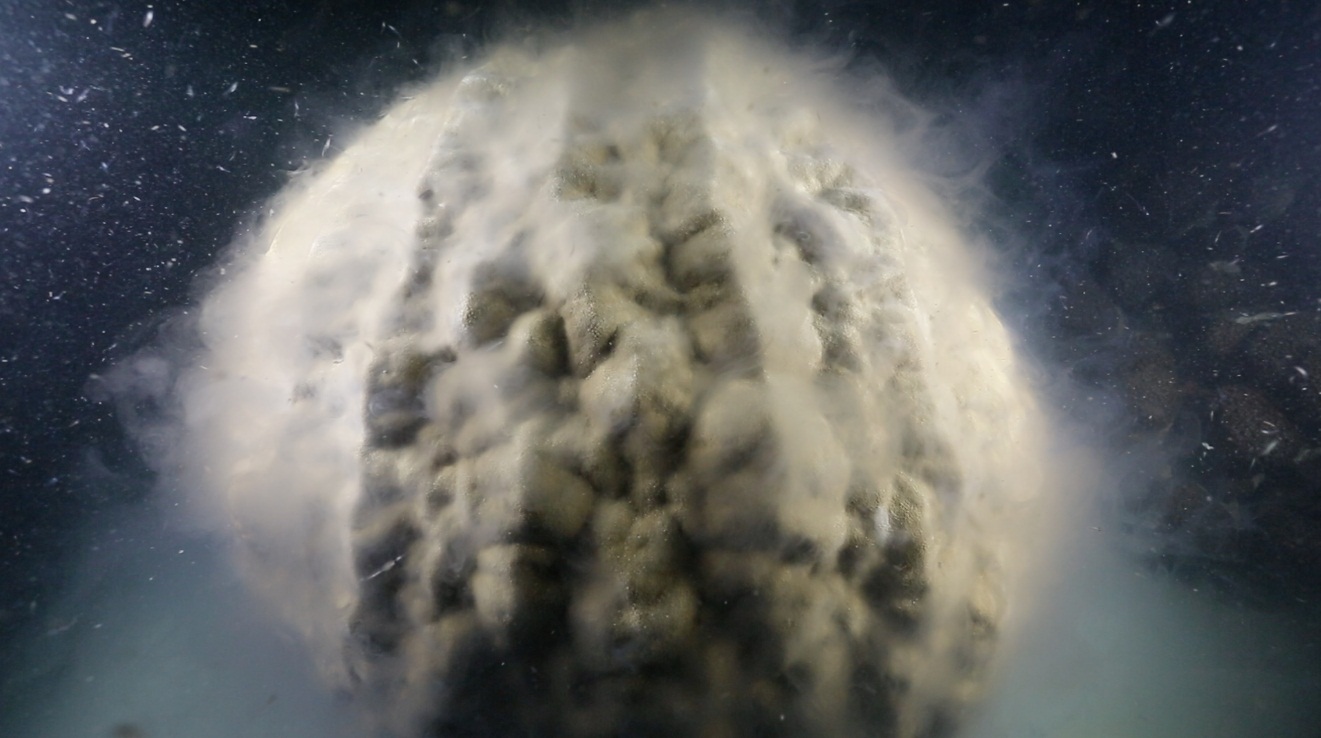
On May 6 (the 18th day of the 3rd lunar month), signs of a mass coral spawning event were already visible on the sea surface outside the atoll, while corals inside the lagoon remained inactive. Previous studies and experience suggest that this difference may be related to the systematic variation between inner and outer water systems created by the atoll structure, leading to differences in the timing of mass spawning events. When an extreme low tide occurred, accompanied by seawater temperatures averaging between 28–32°C and a calm, glassy sea surface, researchers sensed that the long-anticipated annual spectacle was imminent after nearly a month of continuous observation. On May 8 (the 20th day of the 3rd lunar month), MNPH staff conducted a night dive along the northern shore of Dongsha Island and documented a mass spawning event of chrysanthemum corals. On May 9, near the Longbaiwei area off the eastern shore of Dongsha Island, footage was also captured of Porites corals simultaneously releasing eggs and sperm bundles.
 |
 |
|
Mass coral spawning on the northern shore of Dongsha Island |
Porites coral releasing gametes near Longbaiwei, Dongsha Island |
Dongsha Atoll is like a dazzling pearl set in the blue ocean, nurturing countless forms of life. In recent years, coral spawning events in Dongsha Atoll National Park have consistently occurred around the 23rd day of the 3rd lunar month, demonstrating greater stability compared to spawning times in Kenting. We understand that the timing of mass coral spawning—whether delayed or advanced—is closely linked to broader oceanic environmental conditions and reveals important insights into marine ecological processes. However, with the growing impacts of climate change and human economic activities on the ocean, the urgency of marine conservation actions has never been greater.