


On February 25, 2017, the Tiger’s Heart (Caesalpinia bonduc (L.) Roxb.) on Dongsha Island finally bloomed again. In previous years, the flowering season of Tiger’s Heart on Dongsha typically lasted from October to January, but this year the blooming period was delayed.
Tiger’s Heart is a species of the genus Caesalpinia in the legume family (Fabaceae). It is a woody climbing shrub that can grow up to 10 meters in length. The entire plant is covered with sharp hooked spines, including its pinnate leaves, stems, and fruits, and it is also known by the common name “Gray Nicker.” The species is widely distributed along coastal sandy areas in tropical and subtropical regions across continents. In Taiwan, records show its presence in Yilan, Hsinchu, the mouth of the Zengwen River, Lanyu, Dongsha Island, and the Nansha Islands. It has also been recorded in Guangdong and Guangxi in mainland China, as well as on Ishigaki Island in Japan. In Taiwan, however, due to its thorny and seemingly unappealing appearance, Tiger’s Heart has often been removed, resulting in extremely low population numbers and its classification as a rare and endangered species. Fewer than five individual plants have currently been identified on Dongsha Island. In other countries, Tiger’s Heart also faces survival challenges. On Lord Howe Island in Australia, wild populations are scarce and may be threatened by invasive herbaceous plants (Note 1), placing them at risk of extinction. In India (Note 2), the species faces threats from unsustainable use by local residents and habitat destruction. Therefore, understanding its growth patterns and phenology in natural habitats is a crucial foundation for its survival and conservation.
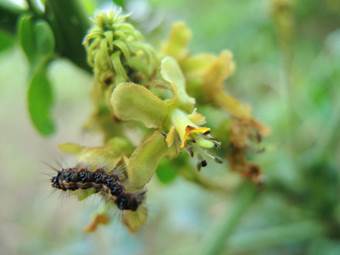
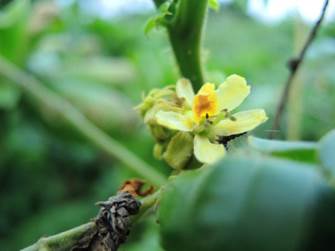
Author: Dongsha Management Station / Chang Hsin-yi
References:
Note 1: NSW Government. Update on March 19, 2017.
Note 2: Balasubramanian, D., K. Arunachalam, and A. Arunachalam. 2016. Dioecious Caesalpinia bonduc (L.) Roxb. calls for conservation in Burachapori Wildlife Sanctuary, Assam. Tropical Ecology 57(1): 119–124.