

Simply put, a Marine Protected Area (MPA) is a designated zone regulated by law to protect marine environments and ecosystems. In the long run, the establishment of protected areas helps restore marine fishery resources and greatly benefits the balance between ecology and fisheries-based economies. Understanding the friendly intentions behind MPAs and listening to the ocean’s earnest call—being willing to learn more—is one of the best actions we can take to treat the ocean kindly.
The Origins of Marine Protected Areas
Tracing the international historical context, the concept of marine protected areas was first proposed at the 1962 World Conference of National Parks. At that time, special vegetation ecosystems and historically significant memorial areas were transformed into national parks. Although the focus was not yet entirely on marine resource conservation—being primarily concerned with preserving cultural heritage and historic monuments—the extension of land-based conservation concepts into marine environments was innovative for its time. This conservation mindset provided opportunities for the global development of marine protection.
Definition and Current Status of Marine Protected Areas in Taiwan
In Taiwan, a Marine Protected Area is defined as “a specific area extending seaward from the mean high tide line, possessing special natural landscapes, important cultural heritage, and ecological resources for sustainable use, and requiring legal or other effective management measures for protection.” This definition demonstrates that MPAs encompass rich cultural, geological, and ecological resources.
In particular, Dongsha Atoll, located near the Coral Triangle, boasts abundant and magnificent marine resources. Its biodiversity of marine life and corals is among the richest in the world. Dongsha Atoll National Park is currently zoned according to national park management principles into General Control Areas, Special Scenic Areas, and Ecological Protection Areas. Each zone is managed based on its characteristics, taking concrete actions to safeguard these blue waters and ensure marine ecosystems and environmental resources are protected.
Learning from the Wisdom of Our Ancestors
Dongsha Atoll National Park draws from international experience, and around the world similar values of respecting the ocean are shared. In Fiji, for example, traditional customs assign each coastal village responsibility for managing its own designated marine area, with clear tribal regulations governing fishing and resource use. Government agencies coordinate with coastal communities, entrusting them with marine management responsibilities—reflecting a deep respect for nature. In Taiwan’s Orchid Island, similar traditions emphasize harmony with nature. Traditional fishing practices require every resident to observe taboos and act cautiously to allow fish populations to recover. These shared values represent the wisdom of our ancestors—survival guidelines refined through generations of lived experience.
Looking at the implementation of marine protected areas both domestically and internationally, key factors include enforcement strength, zoning standards, and commitment to biodiversity conservation. As global fishery resources continue to decline, only by recognizing marine ecological protection as essential can the once-abundant oceans gradually regain their rich and vibrant beauty. It is our hope that the vitality of marine life can flourish once again, restoring diverse and colorful ecosystems.
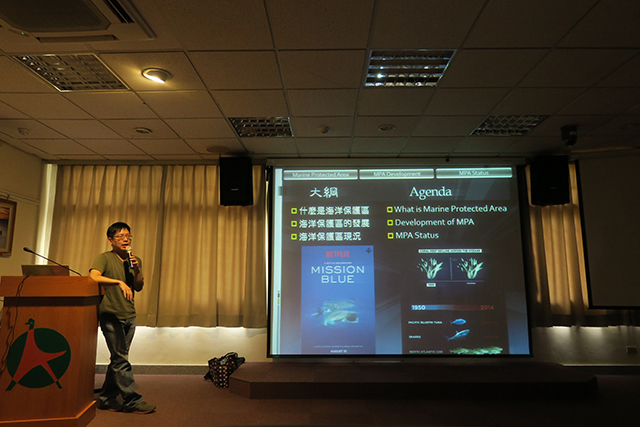
The documentary Mission Blue bears witness to the ocean’s transition from abundance to desolation
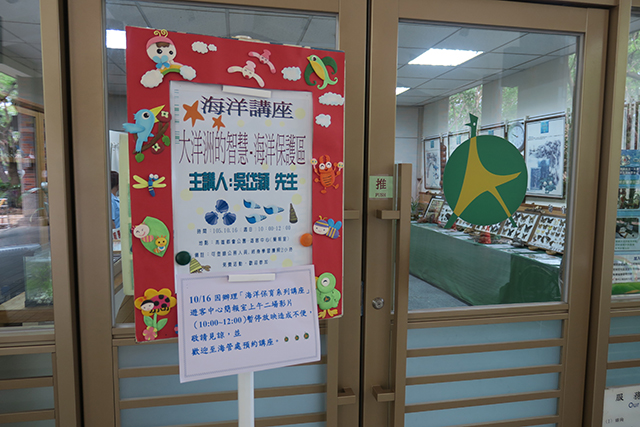
Posters displayed outside the Kaohsiung Metropolitan Park Visitor Center guide visitors inside
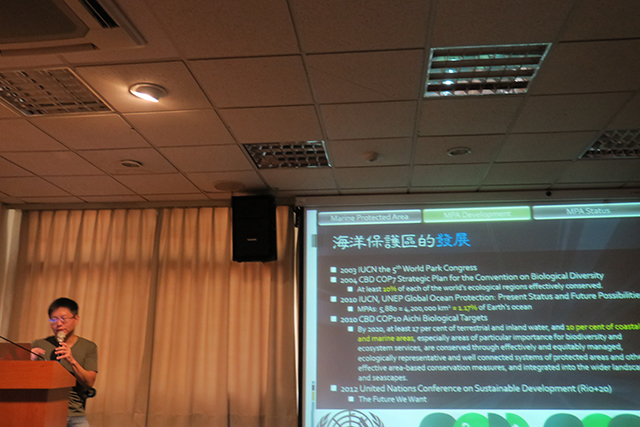
Integrating international knowledge to explain the development of marine protected areas over time
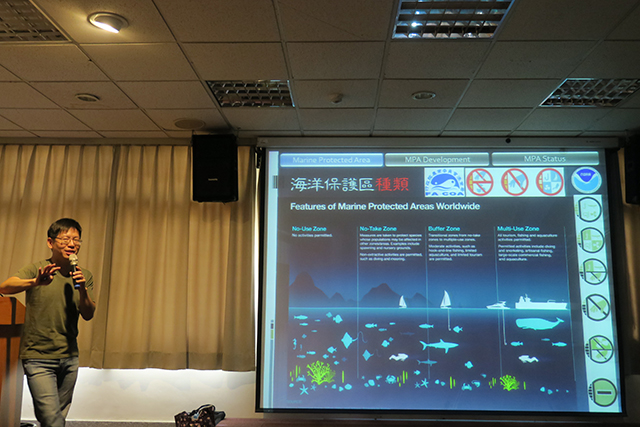
Explaining the diverse types and zoning of international marine protected areas

Speaker Wu Dai-ying posing for a commemorative photo after the lecture
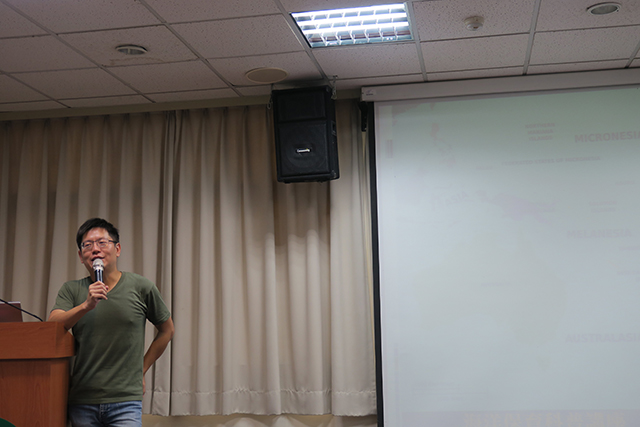
Speaker Wu Dai-ying thanking attendees for joining the lecture
The Key Accountants of the Ecosystem
In a healthy intertidal zone, nutrients produced through photosynthesis by seagrasses and algae become food sources for many marine animals. Herbivorous sea hares and nerite snails graze on algae growing on seagrass and excrete small pellets. These fecal pellets, along with decaying seagrass fragments, are consumed by conchs or clams, while even finer particles are filtered from the water by pen shells. Clams may in turn be preyed upon by moon snails, and organisms that sink to the seabed are cleared by whelks. In a complete and undisturbed ecosystem, each organism fulfills its role, ensuring that no energy or material is wasted. Mollusks, in particular, act like the ecosystem’s accountants, ensuring that energy and food are precisely utilized.
“Return Homes to Hermit Crabs” — Let Treasures Remain Where They Belong
“Beautiful Dongsha Island boasts high mollusk diversity. In seagrass beds, one can see gem-like emerald nerites, sea slugs camouflaged among algae, whelks burrowing in the sand, and moon snails crafting sand ‘bowls’ to protect their eggs,” writes Dr. Chiu Yu-wen in the book. Dongsha Island, like a “paradise for mollusks,” reveals the mysteries of marine biodiversity through these delicate and beautiful creatures. Every shell left in the intertidal zone or on sandy beaches—whether empty or still inhabited—holds important ecological value. When observing and appreciating them, please refrain from collecting or moving shells. Allowing them to remain in their natural environment is one way we can contribute to protecting marine ecosystems.