

Marine National Park Headquarters (referred as MNPH) had sincerely invited thirteen residents in total from the communities in the South Penghu Marine National Park to visit both Lide and Houwan community in the Kenting National Park from Dec 12 (Sat) to Dec 19 (Sun), 2020. The purpose of this trip is to achieve the goal of sustainable development by enhancing the managing capability of the ecotourism carried out within local communities. In addition to that, it is expected to collect experience and suggestions for ecotourism management in the Kenting National Park and its collaborated communities for potential development for ecotourism of the community in South Penghu Marine National Park.
The South Penghu Marine National Park is featured both with natural and humanity landscape.
The South Penghu Marine National Park is featured with natural, humanity landscape and served as a fisher gene bank as well. It has magnificent basalt landscape, abundant coral reef systems and the special historical culture related with the Penghu Channel (also referred as Taiwan Strait). The number of tourist has continuously increased year by year since the opening of the national park in 2014. Though visitors had traveled over the rough ocean to arrive at islands, most of them could stay too short to appreciate any in-depth beauty in natural and culture cultural landscape. If the integration of ecological tour and water leisure activities is feasible, it would be one of the best options for future development.
The successful experience in eco-tourism in Kenting National park is worthy of learning.
During the development of Kenting National Park, the relationships between the Headquarter and local communities has evolved gradually from conflicts to mutual understanding and even further formed cooperative partnerships. Through the dedication to the training programs on local residents, local community has not only become helpful to conservation projects in the park but also promotes the eco-tourism and environment education. The public was attracted by the amazing living natural attractions in this area which is help to promote local commercial consumption. That is helpful to achieve to local community in the sustainable economic development on the exploration of natural resources.
The direction of community development is not only decided by the residents of local community but also is respected by MNPH.
The staffs of MNPH had accompanied with residents from local communities to visit the communities in the Kenting National Park to learn about their activities related to eco-tourism. Those unique activities have been developed by local residents in context of wisely using natural resources. For example, Lide community is the best site for bird watching especially for Gray-face hawk in October very year. In this community, the star jelly agriculture and hand-on experience in harvesting them and its special flavored ethnic cuisine are impressive as well. The hand-on activity in making local cuisine- aiyu jelly from the fruits of climbing/creeping fig, the exploration tour of secluded Lan-ren river, the guided exploration of the historical mysteries along Gueishan trail, collecting brine from the concave of intertidal coral stone, experience in tofu-making by using brine as a local cuisine were impressive.
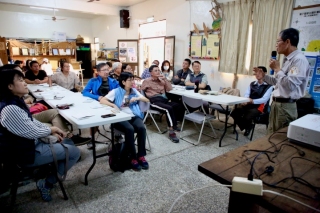
In addition to visit and experience different kinds of ecotourism activities, MNPH held a consultation meeting with community residents about the feasibilities of community ecotourism in the South Penghu Marine National Park. Miss Chen from Dongyuping community expressed that her community can start to plan ecotourism on both land and ocean but hoped MNPH can assist in both marketing the activities and training the interpretation capability of residents as ecotourism guide. Dong-Ji community association suggested that improvement of infra-structure of public service should be considered as the first priority before any ecotourism planning. Miss Chang as a homestay business owner hoped MNPH to improve landscape of community such as providing community a public store, clean environment and assist in tour guide training especially about interpretation capability and the facilities associated with interpretation.
MNPH replied that they have well prepared for promoting projects related to ecotourism and will initiate the tour guide training programs for those communities with good will to carry out ecotourism. Those suggestions for essential improvement of the infra-structure of basic public service facilities will be included for the major work items in the coming year.