

Penghu’s Xiji Islet Blue Cave has become a beloved scenic destination among domestic travelers. Many visitors charter boats from Magong and endure over an hour of sailing to witness the spectacular sight of sunlight streaming through the cave’s opening and illuminating the crystal-blue waters below. As a result, Xiji Islet has transformed from a once little-known uninhabited island into a renowned tourist attraction, even drawing international visitors eager to admire the beauty of the Blue Cave. The growing popularity has also brought significant attention to the Penghu South Four Islands National Park, which was officially established in June 2014.
However, while appreciating the stunning Blue Cave scenery, observant visitors have also noticed large accumulations of marine debris along the magnificent basalt column coastline. Much of the debris consists of Styrofoam fragments. From offshore, piles of white Styrofoam contrasting sharply with the black basalt not only mar the natural landscape but also highlight the alarming issue of marine pollution.
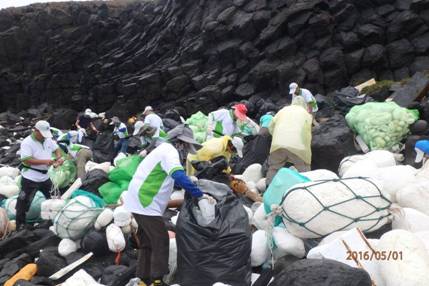
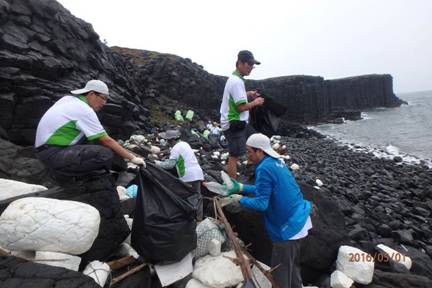
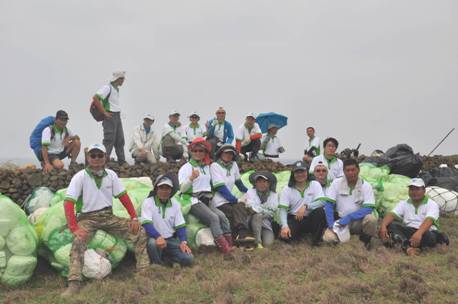
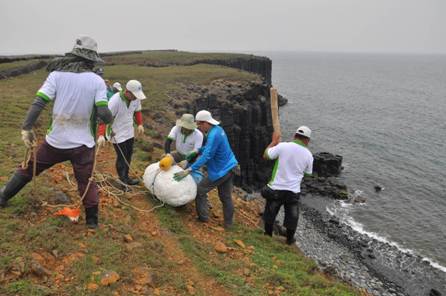
In response to the influx of summer tourists in the Penghu region, the Marine National Park Headquarters (hereinafter referred to as the Headquarters) organized an environmental education beach cleanup event yesterday (May 1) at the Penghu South Four Islands National Park. The initiative aimed to promote marine environmental protection, preserve coastal scenery, and reduce pollution caused by marine debris. A total of 22 volunteers from organizations including the Taiwan Promise Association, the ROC Airborne Special Forces Veterans Association, the Taroko National Park Conservation Volunteer Team, and Novatek Microelectronics Corp. participated in the cleanup on Xiji Islet despite rainy weather.
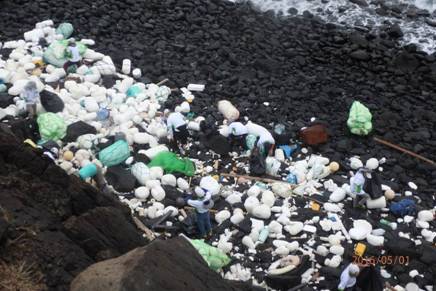
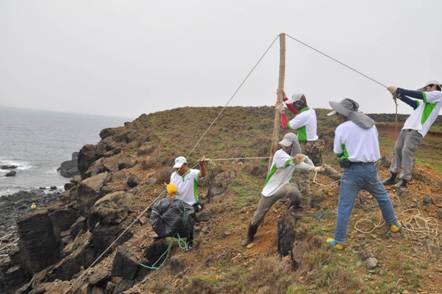
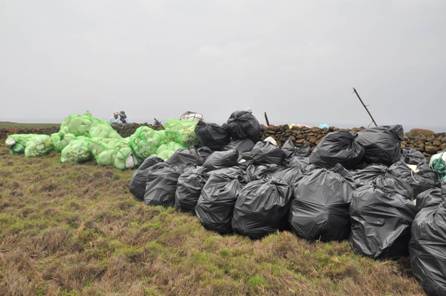
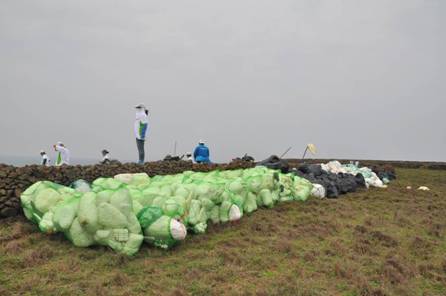
During this cleanup activity, volunteers removed 165 large bags of debris from the northern shore of Xiji Islet, totaling 857 kilograms. The majority consisted of Styrofoam and plastic bottles. The Headquarters stated that the Penghu South Four Islands feature rich coral reef ecosystems and magnificent basalt landscapes, making them excellent venues for environmental education. Visitors are urged not to litter and to practice “leave no trash on the islands.” Considering the difficulty of waste transportation from offshore islands, tourists are encouraged to take their garbage back with them to reduce harm to the marine environment.