

Photosynthesis is one of the most vital processes in the Earth’s carbon and oxygen cycles. In addition to the terrestrial plants we are most familiar with, algae are also key organisms that perform “oxygenic photosynthesis.” Marine “seaweeds” generally grow either floating in the water column or attached to substrates such as rocky shores and coral reefs. Unlike seagrasses—flowering plants that live in the sea—algae have relatively simple structures without differentiated roots, stems, or leaves. However, they contain chlorophyll and are capable of photosynthesis.
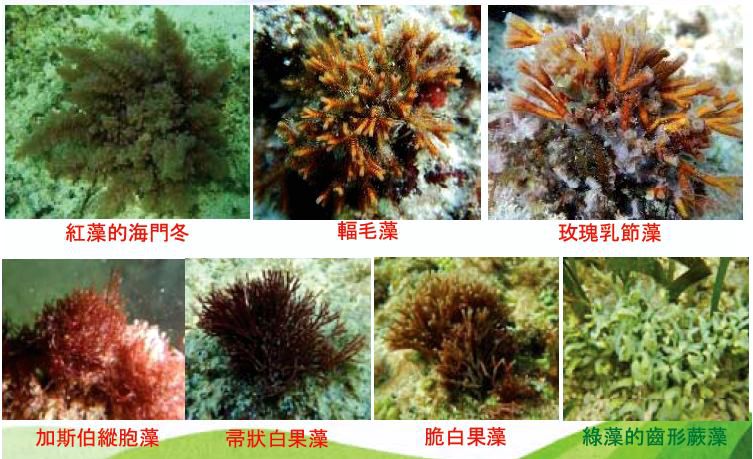
Seaweed communities appearing in spring at Dongsha Atoll
Small Pioneers and Superheroes of the Marine Ecosystem
Seaweeds, through photosynthesis, produce nutrients that form an essential food source for many marine organisms. Dense seaweed assemblages, known as “algal beds,” provide critical habitats for shelter, spawning, feeding, and refuge. For example, newly hatched green sea turtles crawl into the ocean and often take refuge beneath drifting mats of Sargassum, where they live a pelagic life feeding on plankton. Seaweeds are also widely used in daily human life—such as edible laver and kelp—and are processed into health supplements, medicinal materials, fertilizers, and animal feed. Seaweed fibers can even be used to produce textiles, and seaweeds are considered a promising source of biofuel as a sustainable alternative to fossil fuels.
In addition, seaweeds absorb dissolved carbon dioxide from seawater. Studies have shown that their carbon absorption capacity can rival that of tropical rainforests on land. In the face of accelerating global climate change, scientists are exploring the use of fast-growing seaweeds and their ability to absorb large amounts of greenhouse gases to help mitigate global warming and air pollution. In the near future, seaweeds may become the “superheroes” that help save polar bears.
Abundant Seaweed Research Resources in Dongsha Waters
Dongsha features extensive seagrass beds, coral rubble, sandy substrates, and broad intertidal zones during tidal fluctuations—ideal habitats for seaweed growth. As a result, seaweed diversity is high. According to surveys conducted over the years, more than 200 seaweed species have been recorded in Dongsha waters, accounting for approximately one-third of all seaweed species found in Taiwan’s marine areas. Among them, red algae represent the largest number of species, followed by green algae.
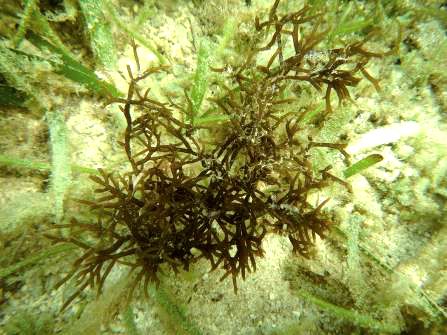
Red algae – edible dragon’s beard vegetable, common around Dongsha Island
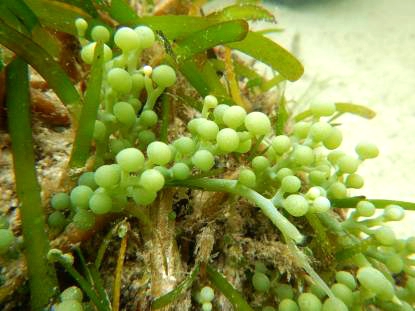
Green algae – Caulerpa, a dominant species in Dongsha during spring
The First Field Guide to Establish Dedicated GenBank IDs for Seaweeds
Since the establishment of Dongsha Atoll National Park in 2007, our Headquarters has actively promoted various conservation research initiatives. To help more people appreciate the ecological beauty of Dongsha’s seaweeds, we commissioned renowned seaweed scholar Professor Wei-Lung Wang to conduct a comprehensive ecological survey of macroalgae at Dongsha Atoll. Over a year and a half, the research team carried out extensive field investigations in Dongsha waters. In addition to traditional identification methods, molecular biological evidence was employed to confirm phylogenetic relationships and accurately identify seaweed species. The results were compiled into the book “Ecological Field Guide to the Seaweeds of Dongsha.” Notably, the GenBank accession number database established in the book represents an innovative milestone. The publication was released in December 2015.
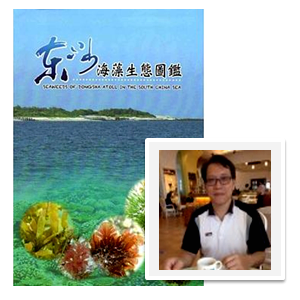
Ecological Field Guide to the Seaweeds of Dongsha and its author, Professor Wei-Lung Wang
“Studying seaweeds requires diving to photograph specimens, followed by detailed comparisons on land. Even the same species can display multiple morphological forms, making identification challenging.” Therefore, Professor Wang and his research team carefully identified each seaweed species discovered in Dongsha waters and assigned them unique “DNA barcodes.” He explained that these barcodes function like identification numbers for seaweeds, enabling researchers to compare and verify species in future studies.
Professor Wang noted that seaweeds are extraordinarily diverse and fascinating, yet they are not easily accessible to the general public. Through the publication of this field guide, he hopes that more people will come to understand seaweeds, appreciate their characteristics, and recognize their ecological importance. He also looks forward to greater participation in seaweed research, environmental education, and science outreach related to Dongsha, ultimately fostering greater awareness and protection of Dongsha Atoll’s marine ecological resources and establishing it as a key international center for marine research.