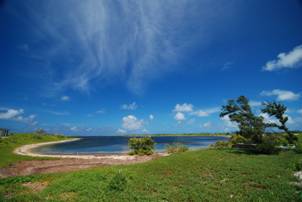


The Marine National Park Headquarters (hereinafter referred to as MNPH) commissioned the Kaohsiung Wild Bird Society this year to conduct avian surveys on Dongsha. During the survey, the flight of a Brown Booby was observed over waters near the southern coast of Dongsha Island. Records of migratory bird species continue to be updated. This year, several new species have been documented, including the Brown Booby, Chinese Pond Heron, Common Greenshank, Wedge-tailed Shearwater, and White-throated Rock Thrush, bringing the cumulative total to 284 recorded species. This highlights the important role of Dongsha Island for seabirds and migratory birds.
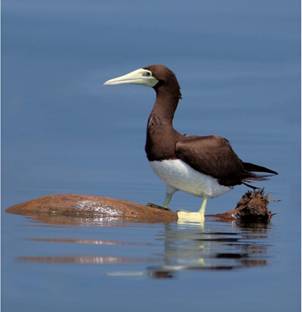
(Photo provided by the Wild Bird Society of Keelung)
According to MNPH, in 1867 British explorer Cuthbert Collingwood documented that the Brown Booby was once a dominant species around Dongsha Island and its surrounding waters. However, due to human development and activities after the 19th century, its numbers gradually declined. This recent record represents the first formal observation since the establishment of Dongsha Atoll National Park. The rediscovery after 148 years has greatly encouraged researchers and MNPH staff.
Dongsha Island has recorded migratory birds originating from places such as Chongming Island in mainland China, northwestern and southeastern Australia, and Taiwan proper. In April this year, a Ruddy Turnstone bearing orange and blue leg flags was discovered. After consulting international bird-banding databases, researchers learned that the bird had been banded in March 2014 on King Island, southeast of Australia—more than 7,000 kilometers from Dongsha Island. MNPH noted that Dongsha’s geographic location, along with its vegetation and wetland habitats, provides essential resting and foraging services for migratory birds along their routes. In addition to the Brown Booby, the rare passage migrant White-throated Rock Thrush was banded with a Taiwan-issued metal ring by certified personnel from the Kaohsiung Wild Bird Society before being released back into the wild.
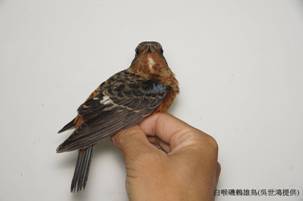
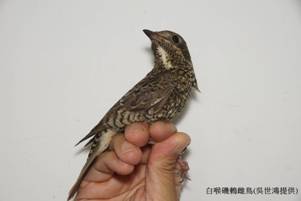
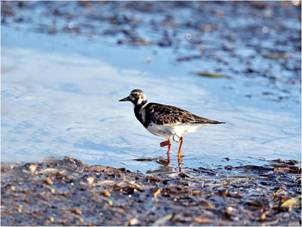
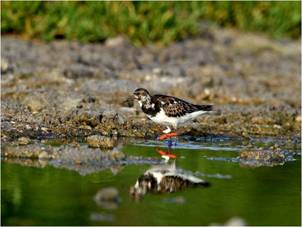
MNPH indicated that bird surveys at Dongsha Atoll National Park have been conducted continuously since the park’s establishment. Among these efforts, bird banding plays a crucial role in unveiling the mysteries of migratory bird arrival and movement. By fitting birds with uniquely configured color flags and alphanumeric metal rings, researchers aim to gradually decipher the migration patterns of birds visiting Dongsha.