

Jellyfish are among the oldest animals on Earth, having appeared in the oceans more than 500 million years ago. Yet in today’s rapidly changing environment, these soft and translucent creatures have become unexpected “winners,” thriving while many other marine species struggle. Reports of jellyfish blooms now appear regularly around the world, sparking discussions about whether jellyfish are “taking over the oceans.” In reality, jellyfish populations naturally fluctuate. Based on 137 years of long-term data, marine scientists have found that global jellyfish peaks occur roughly every 20 years. There is no solid evidence showing that jellyfish are continuously increasing worldwide. However, this does not mean the problem isn’t real. Human activities are amplifying these natural oscillations, causing jellyfish numbers in certain regions to rise to unprecedented levels.
Jellyfish thrive in disturbed marine environments largely because of their unique life cycle. Their polyps attach to rocks, piers, shipwrecks, and even man-made structures, remaining dormant until conditions become favorable. Once triggered, they can rapidly release large numbers of medusae, leading to what we call a jellyfish bloom. Under warming seas, ocean acidification, coastal eutrophication, and expanding low-oxygen zones, their competitors, such as fish and many benthic organisms, become weaker. Jellyfish, however, can store oxygen in their gelatinous mesoglea, giving them an advantage in hypoxic waters. Overfishing further disrupts this balance. Small fish such as sardines and anchovies compete with jellyfish for the same food, zooplankton. When these fish decline due to heavy fishing pressure, zooplankton effectively becomes an exclusive buffet for jellyfish. Meanwhile, jellyfish predators like sea turtles and large predatory fish are also declining, tipping the food web even more in jellyfish’s favor.
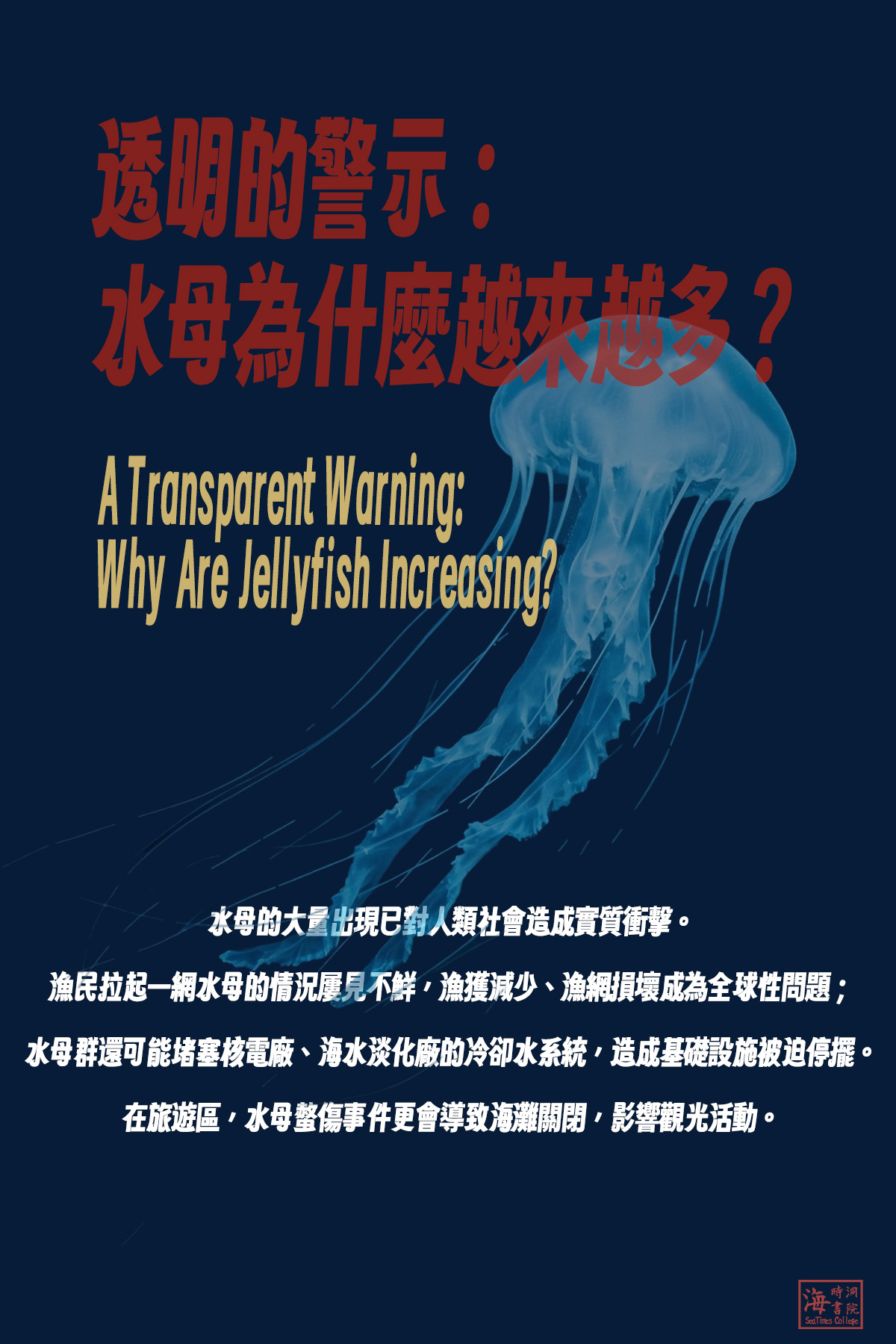
The surge of jellyfish is already causing tangible impacts on human societies. It is increasingly common for fishers to haul up nets filled with jellyfish instead of fish, leading to reduced catches and damaged gear. Jellyfish swarms can clog cooling-water intakes at nuclear power plants and desalination facilities, forcing temporary shutdowns. In tourist regions, jellyfish stings have led to beach closures and disrupted recreational activities.
Managing jellyfish populations is challenging, especially because we still know very little about the polyp stage, including its ecology, mortality, and factors affecting attachment success. As a result, most management actions are reactive rather than preventive. The true solution lies in addressing the root causes of jellyfish blooms: overfishing and pollution. Restoring fish and turtle populations, reducing nutrient runoff, and improving habitat and coastal infrastructure design can gradually bring marine ecosystems back toward stability.
Jellyfish are not our enemies, nor are they enemies of the ocean. Instead, they are indicators of ecological imbalance. When jellyfish appear in great numbers, they are signaling that the ocean is in trouble. If we can recognize and act upon this “transparent warning,” we may still have a chance to restore the ocean’s health before it reaches a point of no return.