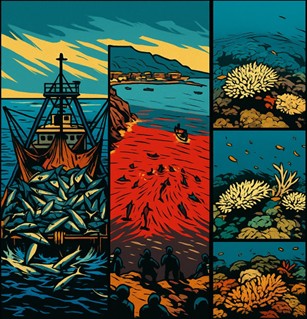


The vast ocean, covering over 70% of the Earth's surface, is the source of life and the Earth's climate regulator. However, human activity is threatening this blue expanse at an unprecedented rate. Ocean conservation is no longer a distant academic topic; it's an urgent global challenge. For an accessible, in-depth understanding of these issues, environmental documentaries are an excellent entry point. Through stunning visuals and authentic stories, they transform cold, hard scientific data into a moving cinematic experience, allowing us to truly feel the ocean's beauty and sorrow.
Take fisheries resources, for example. The End of the Line (2009) is heralded as a landmark work on the issue of overfishing. Based on the book of the same name by journalist Charles Clover, the film takes us on a global tour of fishing grounds, from Japan’s tuna markets to West African fishing villages. It reveals the astonishing efficiency of modern industrial fishing and its consequences: many major fish species, such as tuna and cod, are rapidly heading toward commercial extinction. It serves as a potent reminder that without immediate changes to our consumption and fishing methods, our oceans could become virtually empty within decades.
A more somber and impactful example is the Oscar-winning documentary The Cove (2009). Director Louie Psihoyos, collaborating with former dolphin trainer Ric O’Barry, uses a nearly espionage-like filming style to expose the annual, cruel, and secretive dolphin hunt in Taiji, Japan. The film is not just about animal rights; it also explores the human health risks of consuming dolphin meat due to its high heavy metal content, as well as the complex political maneuvering by Japan within the International Whaling Commission. While the images in The Cove are difficult to watch, the film successfully propelled the truth about Taiji onto the global stage, generating immense international pressure and discussion.
Beyond fishing and hunting, climate change is the greatest long-term threat facing the ocean. Chasing Coral (2017), directed by Jeff Orlowski, focuses its lens on one of the planet's most beautiful yet vulnerable ecosystems: coral reefs. Using time-lapse photography, the documentary records the global phenomenon of coral bleaching, which is caused by rising sea temperatures. Coral bleaching is the process where corals expel the algae that live in their tissues; if prolonged, it leads to the death of the coral. Chasing Coral bears witness to the heartbreaking, large-scale deaths of corals in places like Australia’s Great Barrier Reef. It transforms the abstract concept of climate change into the visible, tangible loss of life, making the severe challenges facing coral reefs impossible to ignore.
Films like The End of the Line, The Cove, and Chasing Coral are profoundly impactful educational tools for ocean conservation. Their role extends beyond merely providing knowledge; more importantly, they catalyze public awareness and action. When we witness endangered marine life, depleted fishing grounds, and bleached coral reefs, we gain a deeper understanding that the ocean's health is inextricably linked to our own lives.
Watching these documentaries can be the first step on a journey toward ocean conservation. It encourages us to consider that as consumers, how can we choose sustainable seafood? As citizens, how can we support stricter environmental policies? As humans, how can we mitigate the impacts of climate change?
In addition to internationally renowned films, Taiwan's Marine National Park Headquarters also offers a wealth of local ocean conservation video resources. These films often discuss issues such as coral, seagrass, or unique geological landscapes from a perspective closer to Taiwan, making them an excellent way to understand Taiwan’s marine ecology and conservation challenges. The ocean is a colossal whole, and its health requires the attention and protection of every one of us. Let the lens guide you into the depths of the ocean and begin your ocean conservation learning journey.