

Deep in the ocean, many lives do not survive alone. Instead, they cooperate and help one another, collectively upholding the balance of this blue world. This type of relationship is known as "symbiosis." In biology, symbiosis refers to a close and long-term interaction established between different species. Based on whether both parties benefit, scientists divide symbiosis into three types: Mutualism, Commensalism, and Parasitism. Mutualism means both sides benefit; Commensalism is where one party benefits and the other is unharmed; and Parasitism is when one benefits at the expense of the other.
In the ocean, examples of mutualism are colorful and full of creativity. Perhaps the most widely known is the partnership between the clownfish and the sea anemone. While most fish would be paralyzed or even killed by the anemone's toxic stinging cells upon contact, the clownfish swims among the tentacles with ease. The secret lies in a special layer of mucus on its body. This mucus mimics the chemical signature that the anemone is familiar with, causing the anemone to mistake the fish for part of its environment. This "chemical deception" allows the clownfish to move safely within the anemone and even reproduce there. In return, the clownfish cleans parasites from the anemone's surface and drives away predatory fish that might try to eat it. Furthermore, its excretions contain nitrogen compounds that provide nutrients to the anemone. In short, this is a collaboration of both chemical and ecological intelligence, benefitting both parties immensely.
Another famous underwater duo is the pistol shrimp and the goby. The pistol shrimp, though small, possesses a specialized large claw that can generate a sonic boom to stun prey; however, its eyesight is extremely poor. It can barely see its surroundings. The goby is the opposite: small-bodied but equipped with keen eyes. Their cooperation is a perfect example of "complementary strengths and weaknesses." The shrimp is responsible for digging and maintaining a safe burrow, while the goby acts as a lookout, constantly watching for external movements. Their communication is also quite endearing: when the goby senses danger, it quickly flicks its body. The shrimp’s antennae are always lightly resting on the goby, and upon feeling the signal, both instantly retreat into the burrow to hide. This type of cooperation is facultative mutualism, meaning they can survive separately, but living together makes their lives safer and more efficient.
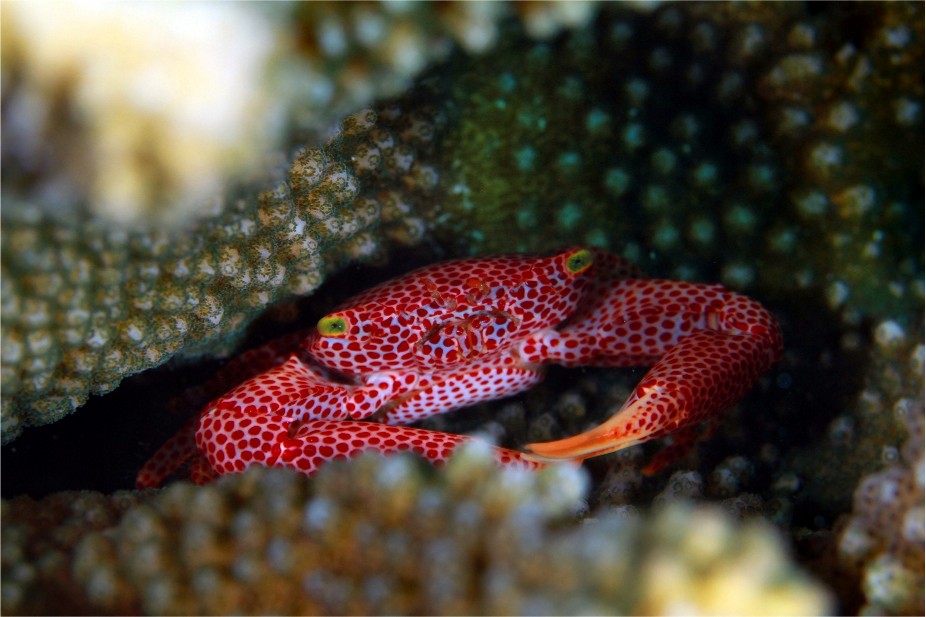
Beyond these well-known examples, there is a humble but heroic guardian: the coral crab. These crabs live among the branches of staghorn coral, feeding on the coral's mucus while protecting the coral from predators like the crown-of-thorns starfish. Studies have found that coral crabs of different sizes correspond to different-sized enemies, acting like a finely organized defense force. Even more surprising, the crabs' defensive behavior can extend to nearby micro coral colonies, creating a " associational defense" that maintains the stability of the reef during crown-of-thorns starfish outbreaks.
From the clownfish to the pistol shrimp and the coral crab, these stories of mutualism demonstrate the subtle balance of the natural world. They are not merely collaborations between organisms; they are the bedrock that supports the resilience of the entire marine ecosystem. As climate change and human activities continue to threaten these delicate relationships, we must understand that safeguarding these symbiotic life contracts is equivalent to safeguarding the ocean itself. The next time you see a clownfish gliding through anemone tentacles or a goby keeping watch over the sandy seabed in an aquarium, remember, it’s more than just a charming scene. It’s an “ocean covenant,” a testament to precise cooperation refined through millions of years of evolution.